
Last updated October 30, 2026
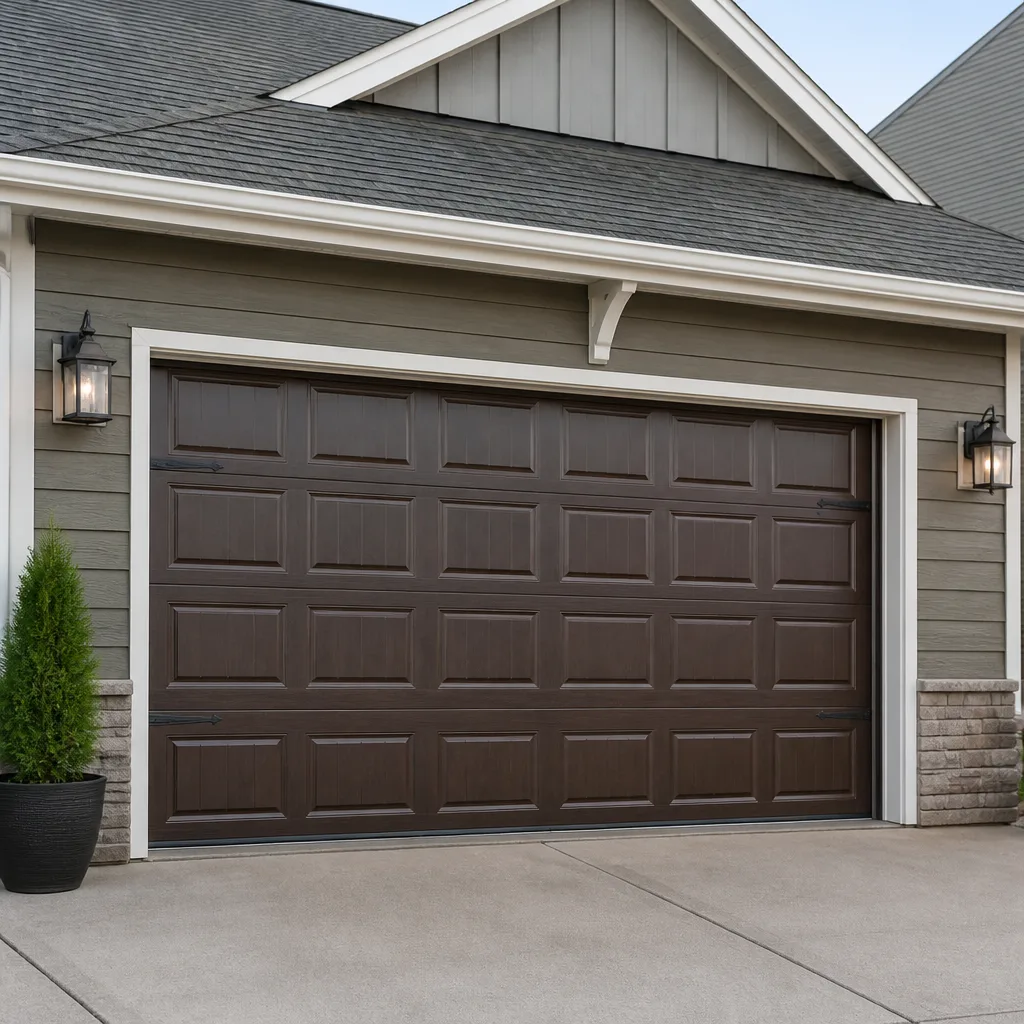 Raised-panel steel
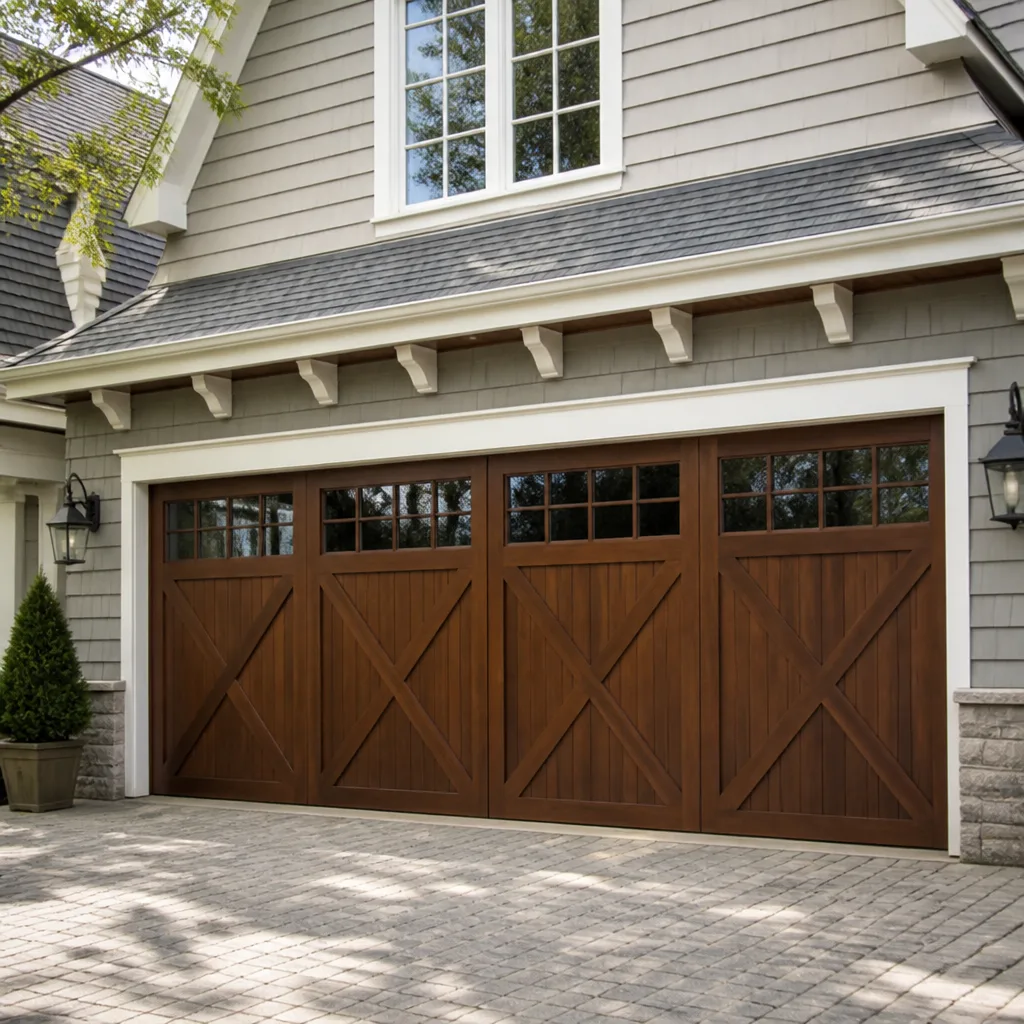 Carriage house
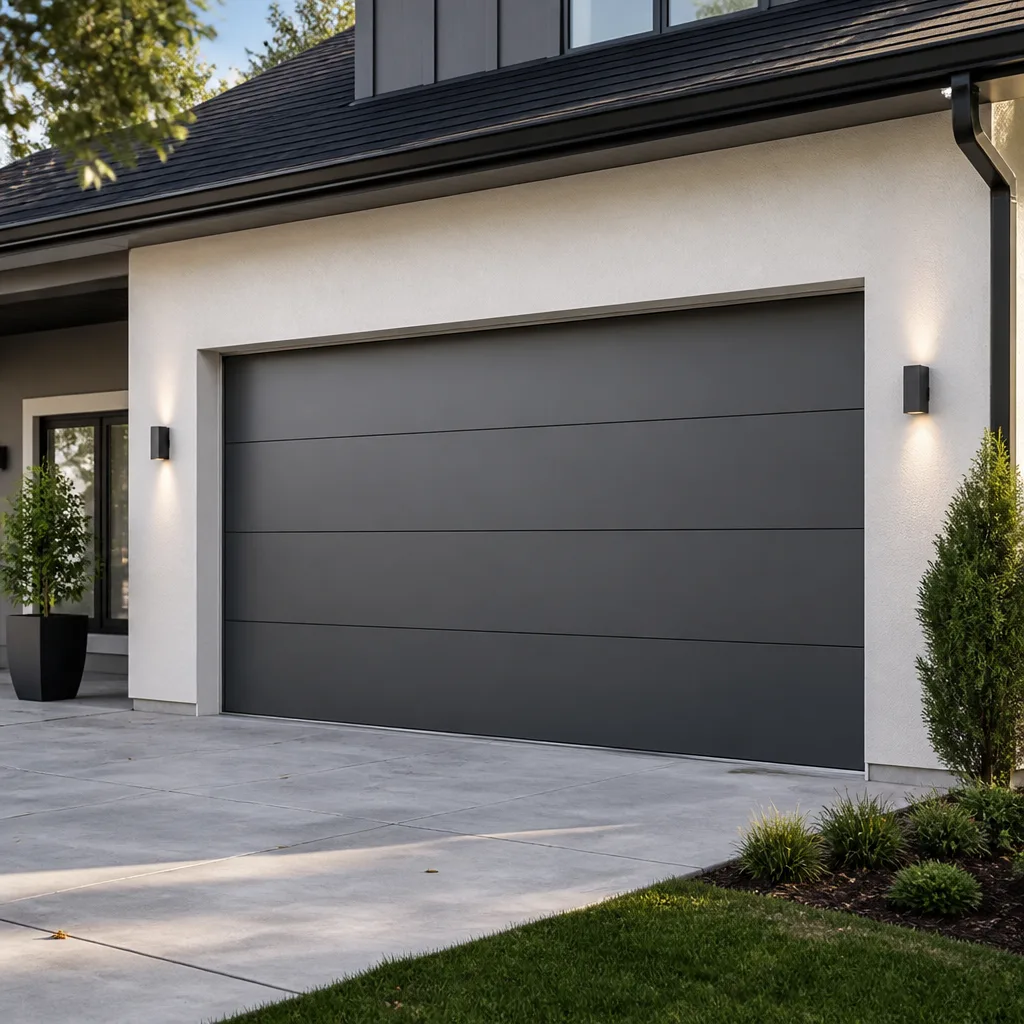 Modern flush
 Full-view glass
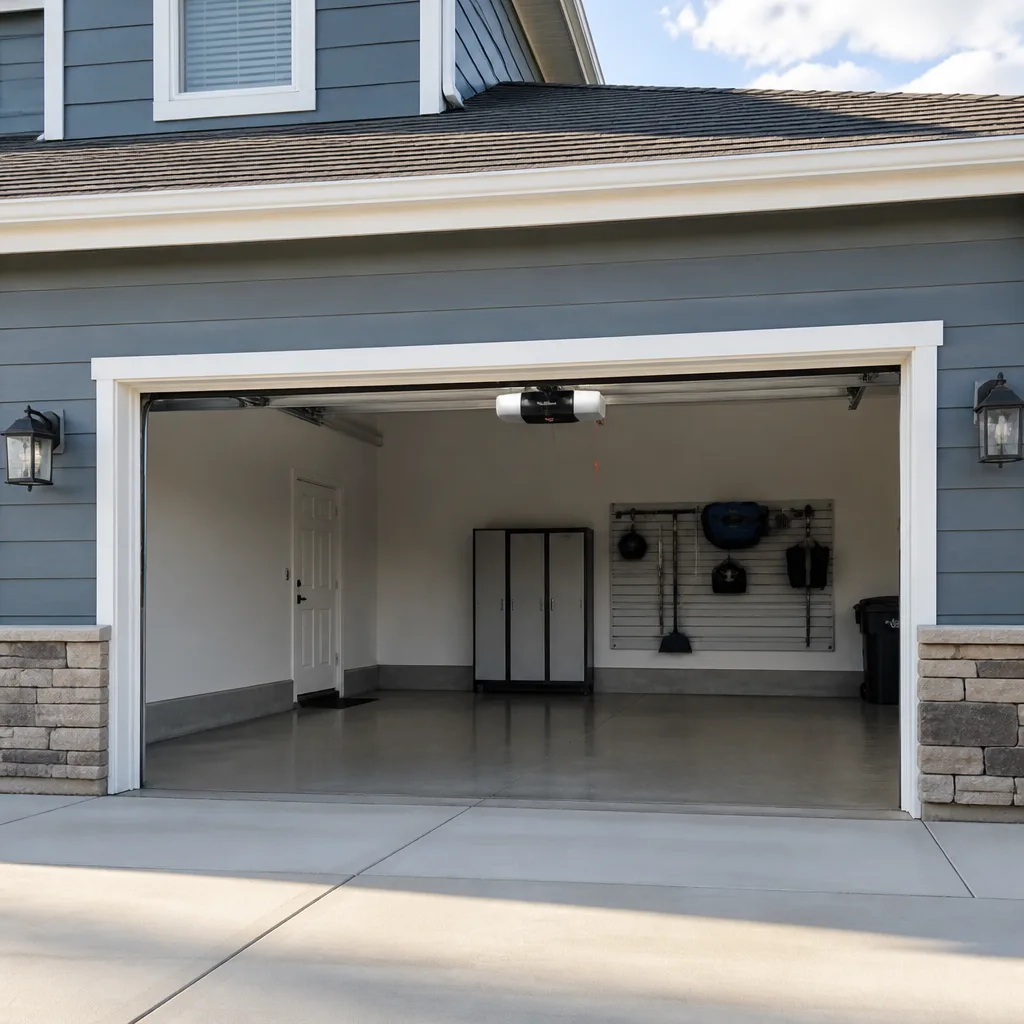 LiftMaster openers
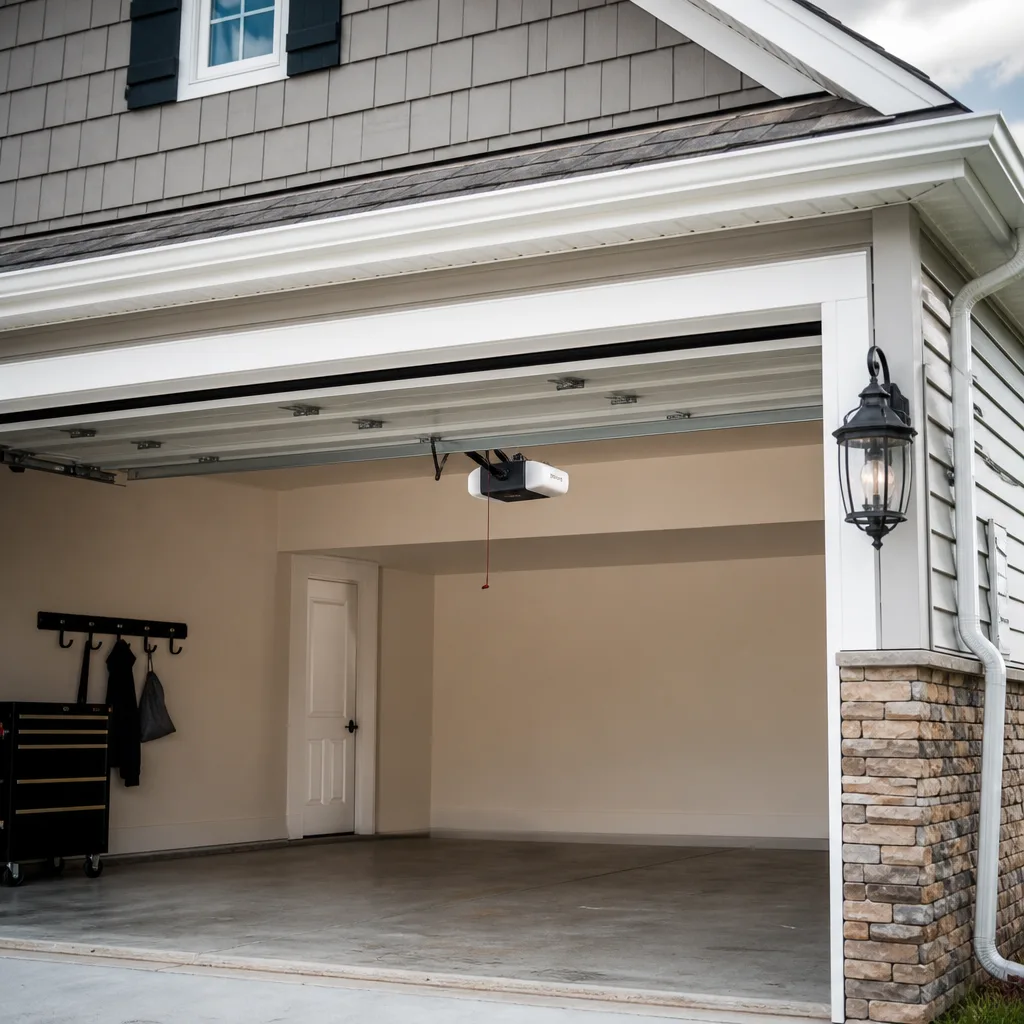 Chamberlain openers
Full 25-point door and opener safety check with every visit - springs, cables, rollers, tracks, and your LiftMaster or Chamberlain opener included
You get a price before we start. It does not change when the truck arrives.
Get your free estimateDIY vs Professional Garage Door: The Miami Beach Homeowner’s Decision Guide
Every few months, a Miami Beach homeowner calls us after watching a 20-minute YouTube video and attempting a garage door repair that went sideways. Sometimes it’s a spring that snapped and took out a section of track. Sometimes it’s a door that now sits crooked because the cable unwound unevenly. Here’s the reality most online guides skip: in Miami Beach, the DIY-vs-professional question isn’t really a question for most repairs. It’s a legal and safety line, and where that line sits surprises a lot of people. This guide walks through exactly what you can and can’t do yourself, what Florida law and Miami-Dade County code say, and what a botched job actually costs in this market.
Quick Answer
For Miami Beach homeowners, professional garage door service is the correct choice for spring replacement, cable work, panel replacement, and full door or opener installation. Miami-Dade County’s High Velocity Hurricane Zone (HVHZ) code requires permits and licensed contractors for structural door work, which makes most meaningful DIY installation illegal. The narrow set of tasks you can safely and legally handle yourself: lubrication, visual inspection, sensor realignment, and remote control programming. For everything else, hire a licensed specialist.
Styles & brands we work with
Table of Contents
- What Florida Law and Miami-Dade Code Actually Say About DIY Garage Door Work
- The Short List: What Miami Beach Homeowners Can Safely Do Themselves
- Why Torsion Spring Replacement Is a Hard No for DIY
- How a Botched DIY Installation Affects Your Wind Mitigation Insurance Credits
- What “Professional” Actually Means in Miami Beach: Licensed Specialist vs. Handyman
- The Real Cost of DIY When It Goes Wrong in South Florida
- The Verdict: Repair When Possible, Replace When Necessary
What Florida Law and Miami-Dade Code Actually Say About DIY Garage Door Work
Here’s the part most DIY guides conveniently gloss over. Miami-Dade County sits inside what’s called the High Velocity Hurricane Zone, or HVHZ. It’s the strictest wind-load building code in the United States, stricter than any other county in Florida, and it exists because Hurricane Andrew flattened entire neighborhoods in 1992. Your garage door is classified as part of the building envelope, same as your roof and your impact windows. That means structural work on it, including installing a new door or replacing panels, legally requires a permit and a licensed contractor.
So what’s the practical line? Florida Statute 489.103 allows a homeowner to act as their own contractor for work on their primary residence in some cases. But Miami-Dade’s local amendments close that door in practice for garage door installation. The county requires product approval documentation, wind-load calculations, and permit drawings signed by a licensed professional. A homeowner cannot pull those documents together on their own. If you install a door without a permit in Miami Beach and a code enforcement officer finds out, the sequence is predictable: a stop-work order, a fine, a requirement to obtain an after-the-fact permit, and in the worst cases, forced removal of the door.
And then there’s the resale problem. When you sell a home in Miami Beach, you’re required to disclose unpermitted work on the seller’s property disclosure. An unpermitted garage door installation becomes a bargaining chip for the buyer’s agent and a liability for you. We’ve seen deals nearly collapse over a $900 unpermitted door installation because the buyer’s inspector flagged it during the four-point inspection.
Repairs are different from installations. Replacing a broken spring, a frayed cable, or a bent roller does not require a permit in Miami-Dade County because you’re restoring existing equipment, not altering the structure. That’s the legal line: repairs are service work. New doors and full replacements are construction, and construction in this county has paperwork attached.
The Short List: What Miami Beach Homeowners Can Safely Do Themselves
We’re not here to say you should never touch your garage door. There’s a handful of maintenance tasks that are genuinely safe, genuinely useful, and genuinely legal for a Miami Beach homeowner to perform. These tasks keep your door running smoothly between professional service visits and extend the life of the equipment.
1. Lubrication
Your garage door has metal-on-metal contact points that grind without lubrication: hinges, rollers, springs, and the opener chain or screw drive. Twice a year, apply a white lithium grease or silicone-based garage door lubricant to the hinge pins, roller bearings, and the torsion spring. Do not use WD-40 as your primary lubricant; it’s a cleaner, not a long-term lubricant. A $12 can of proper lubricant will last you two years and meaningfully extend the life of your hardware.
2. Visual Inspection
Once a month, with the door closed, stand inside the garage and look at the full system. Check for fraying on the cables, rust on the spring, loose bolts on the track brackets, and any gap between the door and the floor. Catching a fraying cable before it snaps saves you from a door that comes off its track and a repair that’s three times more expensive.
3. Safety Sensor Alignment
If your door reverses immediately when you try to close it, the photo-eye sensors near the floor on either side of the opening are likely misaligned or dirty. Wipe the lenses with a dry cloth. If one sensor’s indicator light is blinking, loosen the wing nut on its bracket, adjust the sensor so both lights stay solid, and retighten. This is a five-minute fix that requires no tools beyond your hands and maybe a screwdriver.
4. Remote Control Programming
Replacing a remote or adding a keypad is something any homeowner can handle with the manual and ten minutes of patience. Most openers from Genie and Chamberlain use a learn button on the motor unit itself. Press the button, press the remote button within 30 seconds, and you’re paired. This is a convenience task, not a safety task, which makes it perfect for DIY.
That’s the whole list. Notice what’s missing: anything involving the springs, the cables, the tracks, or the opener motor itself. Those are the components under tension or connected to the home’s electrical system, and those are the components that cause injuries.
Why Torsion Spring Replacement Is a Hard No for DIY
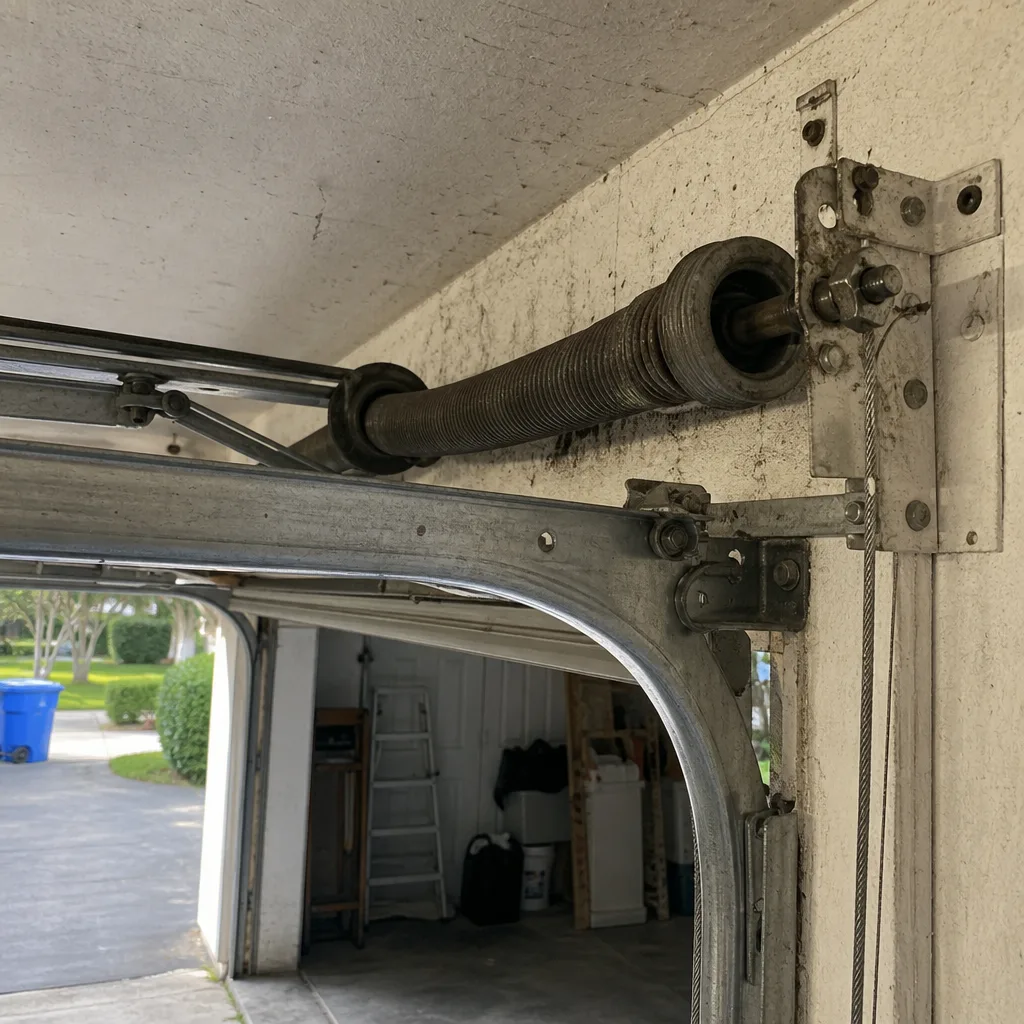
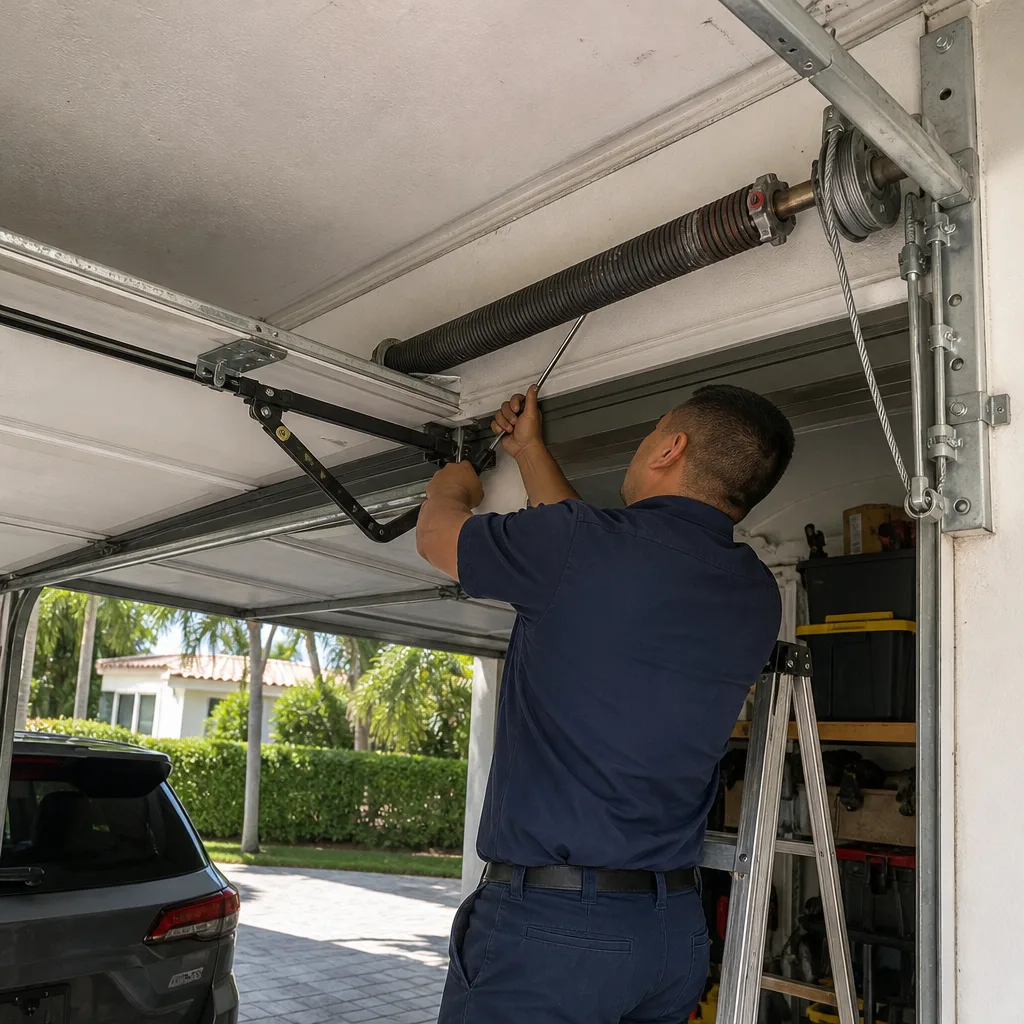
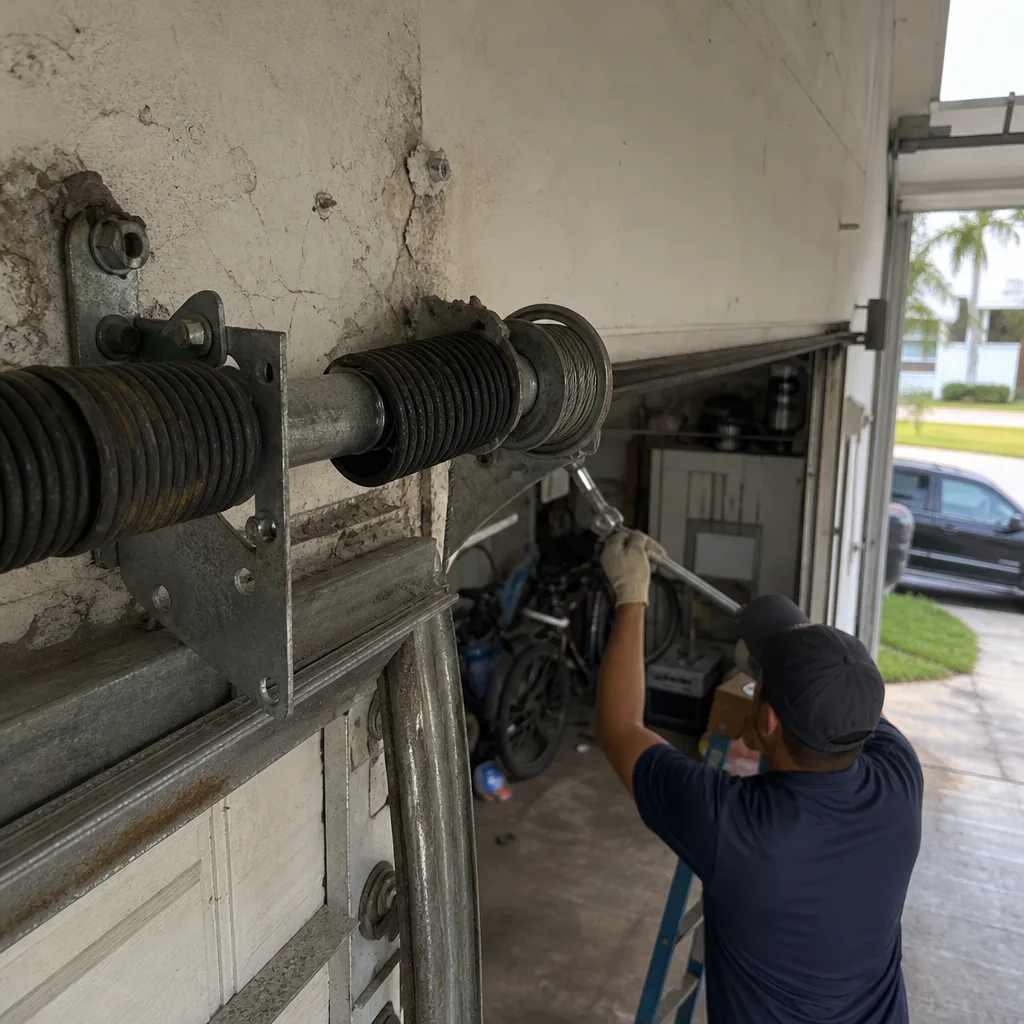
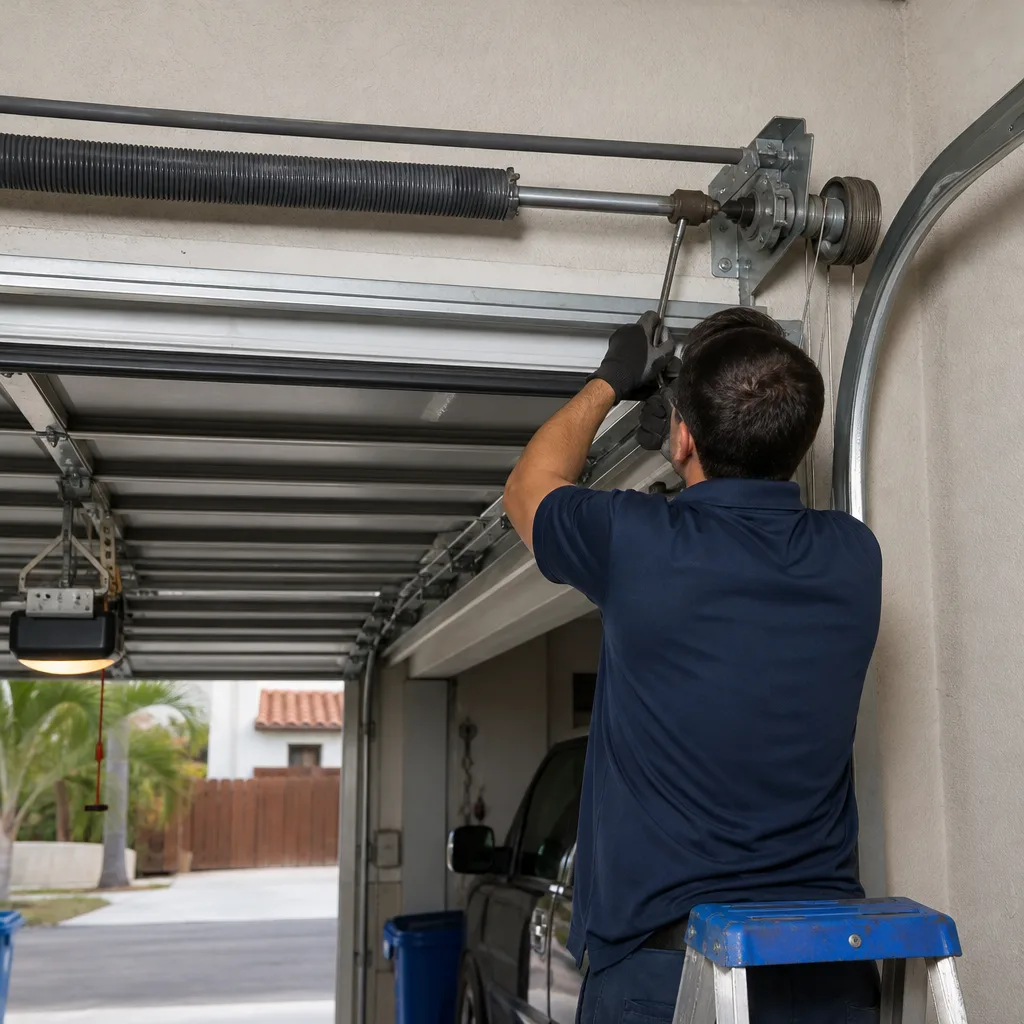
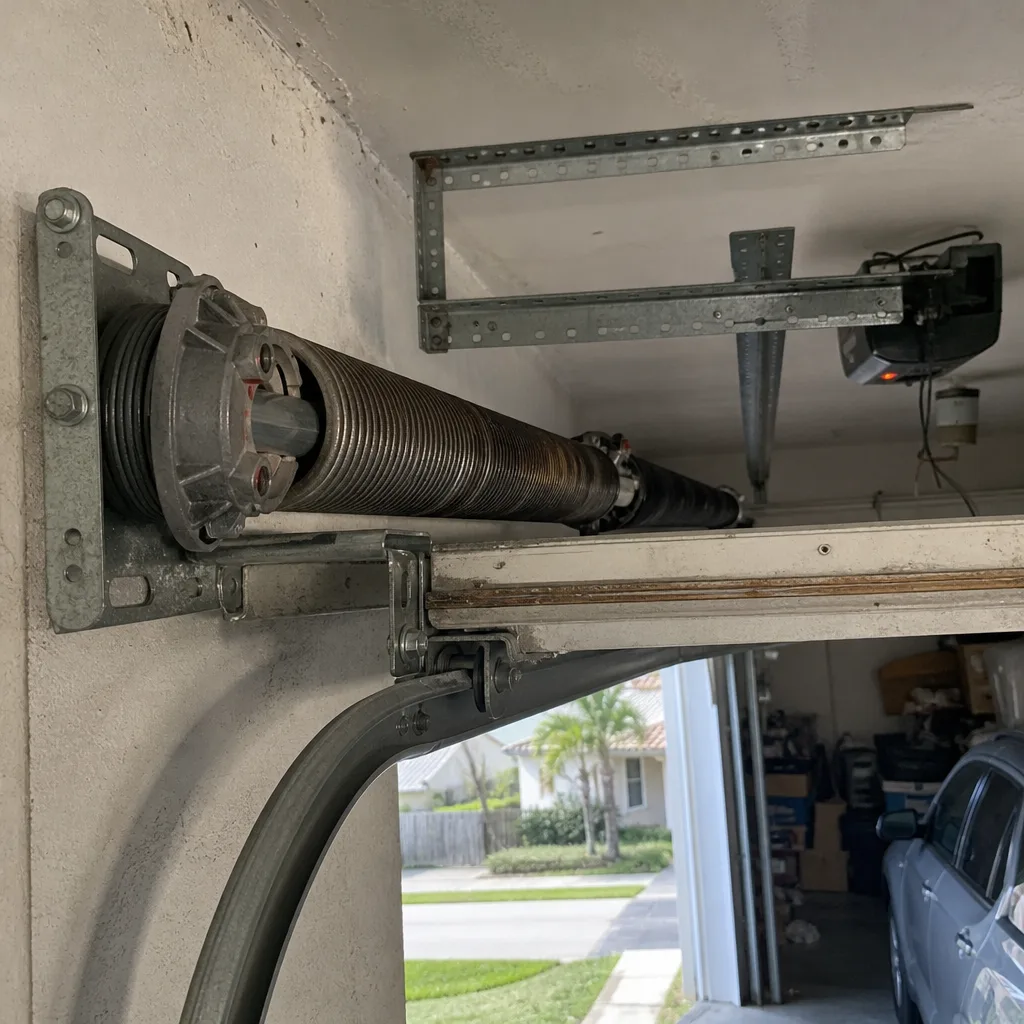
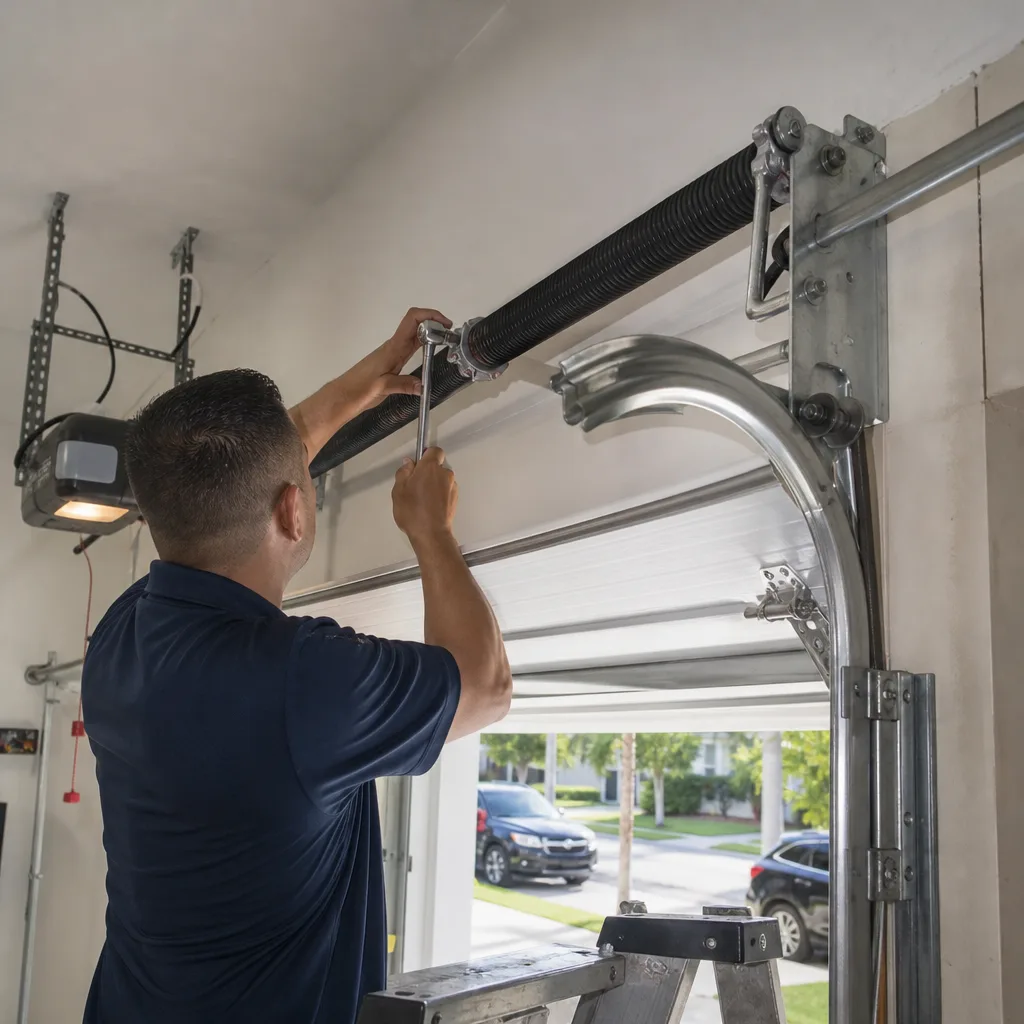
A torsion spring is a tightly wound coil of steel mounted on a bar above your garage door opening. The average residential torsion spring holds between 90 and 150 pounds of torque when wound, and it releases all of that energy in a fraction of a second when it breaks or when a winding bar slips. The U.S. Consumer Product Safety Commission estimates that garage door spring failures send roughly 20,000 Americans to emergency rooms every year, and the injuries are not minor. Finger amputations, deep lacerations, broken wrists and forearms, and facial fractures from winding bars that kick back.
What YouTube doesn’t show you is the feel. You can’t learn the feel of a winding bar under load from a video. A professional has wound hundreds of springs and knows the exact point where the tension changes, where the bar wants to slip, and where to stop. That muscle memory is what separates a 30-minute spring replacement from a hospital visit.
Here’s the physics problem in plain terms. The spring stores enough energy to lift a 150-pound door. That energy has to be released into the spring before the door will move. If your winding bar slips out of the cone during installation, the bar becomes a projectile. If your hand is in the way, the bar doesn’t care. A broken bone is the best-case outcome.
And in Miami Beach specifically, the math gets worse. Salt air corrodes torsion springs faster than in inland Florida. A spring that’s been exposed to ocean air for seven or eight years can fail without warning, and the cone bolts can be rust-welded in place. The torque required to break them loose sometimes exceeds what a homeowner with a pair of vise grips can generate, which leads people to improvise with cheater bars and pipe wrenches. That’s how accidents happen.
How a Botched DIY Installation Affects Your Wind Mitigation Insurance Credits
Most South Florida homeowners don’t connect their garage door to their windstorm insurance premium until they see the line item. In Miami Beach, wind mitigation credits can reduce your windstorm premium by 30 to 45 percent, depending on your carrier and the age of the home. One of the items on the wind mitigation inspection form is the garage door’s wind rating. If the door is not impact-rated or not properly documented, you lose the credit for that component.
Here’s where DIY installation becomes a hidden liability: a wind mitigation inspector verifies that your garage door meets the product approval standard for the HVHZ. That means the door model itself must appear in Miami-Dade County’s product approval database with the correct wind-load rating, and the installation must have been completed by a licensed contractor with the permit on record. An unpermitted DIY installation of even a fully impact-rated door will fail the verification, because there’s no documentation trail proving the door was installed to the approved standard.
What does that cost in actual dollars? A Miami Beach homeowner with a typical windstorm premium of $4,000 to $6,000 per year could lose a garage door wind mitigation credit worth $300 to $600 annually. Over five years, that’s $1,500 to $3,000 in premiums, not counting the cost of retroactively permitting the door, hiring a contractor to inspect and re-certify the installation, or replacing the door entirely if the inspector rejects it.
There’s also the claim denial risk. If your garage door fails during a named storm and the damage leads to water intrusion or roof damage, your insurer will examine the installation history. An unpermitted, non-compliant installation is grounds for partial or full claim denial. Saving $400 on installation labor today can cost you a five-figure claim denial later. That’s not a hypothetical; we’ve seen the aftermath of these denials in Miami Beach homes after Hurricane Irma and Hurricane Ian. For how to protect your home before the next storm, see our emergency preparedness guide.
What “Professional” Actually Means in Miami Beach: Licensed Specialist vs. Handyman
When we say “hire a professional,” we’re not talking about hiring anyone with a truck and a drill. The garage door industry in South Florida has a spectrum of service providers, and they are not equal. Understanding the difference protects you from the most common type of bad garage door experience: the handyman who makes the problem worse.
A licensed garage door contractor in Miami-Dade County holds either a Certified or Registered specialty contractor license for garage door installation. That license requires proof of experience, workers’ compensation coverage, and passing a county exam. It also means the contractor can pull permits for installation work, which is the only legal path to a permitted garage door installation in Miami Beach.
A handyman, by contrast, cannot pull permits. Florida law limits handyman work to non-structural tasks under a dollar threshold. When a handyman installs a garage door in Miami Beach, they’re performing unlicensed contracting, which is a criminal offense, and the homeowner bears the liability for any resulting code violations, injuries, or property damage. If the handyman gets hurt on your property, your homeowner’s insurance may not cover the injury because the work was performed illegally.
Then there’s the specialist-versus-generalist divide within the licensed world. A general contractor can legally pull a permit for a garage door installation, but they typically subcontract the actual work or assign a crew that installs doors occasionally, not weekly. A specialist garage door company lives in this trade. Every job is a garage door job. The technician has diagnosed that exact problem on that exact brand hundreds of times. That depth translates into faster diagnosis, the correct part on the truck, and a repair that holds.
Top Notch Garage Door Repair home is a dedicated garage door specialist. Garage doors are all we do. We service the equipment from eight major manufacturers, so when a Miami Beach homeowner calls us about a noisy Genie opener or a Clopay door that’s binding on the left side, the technician who arrives already knows the failure patterns for that specific brand. That’s the difference between a guess and a diagnosis.
The Real Cost of DIY When It Goes Wrong in South Florida
Let’s talk about math, because the DIY pitch is always about saving money. A torsion spring replacement from a licensed Miami Beach garage door company typically runs $200 to $400 depending on the spring size and door weight. A pair of springs from an online retailer costs $60 to $120. On the surface, DIY saves you $150 to $250. Here’s what the DIY path can actually cost when it doesn’t go according to the video.
- Emergency room copay for a hand or forearm injury: $150 to $2,000, depending on your insurance and the severity of the wound.
- Replacing a door that came off its track and bent two panels: $500 to $1,200 in parts and labor if the panels are still manufactured; if not, a full door replacement at $1,200 to $3,500.
- Repairing a damaged opener motor after a misaligned door forced the motor to work against the spring: $150 to $400, or a full opener replacement at $350 to $700.
- After-the-fact permit fees and fines for unpermitted installation work in Miami Beach: $500 to $2,000, not including the engineering review.
- Lost wind mitigation credits over five years: $1,500 to $3,000, as covered above.
The realistic downside of a failed DIY repair is not the $150 you aimed to save. It’s a cascade of damage to the door, the opener, the tracks, and your medical deductible that routinely exceeds $1,500. And that assumes you stop the project before you damage the door itself. We’ve seen homeowners in North Beach and South of Fifth who turned a simple spring repair into a full door replacement by improvising with the wrong tools.
The economics shift even harder when you factor in the salt air. Miami Beach’s coastal environment corrodes hardware faster than inland neighborhoods like Kendall or Doral. A corroded bottom bracket or rusted cable drum complicates a repair in ways a generic online tutorial never covers. The specialist sees the corrosion in the first five minutes and adjusts. The DIY homeowner discovers it after the door is already dismantled and the hardware store is closed.
The Verdict: Repair When Possible, Replace When Necessary
When we talk to Miami Beach homeowners about their garage doors, the conversation often starts with the DIY question and ends with a different one: who should I hire, and how do I know I’m not getting upsold? The second question matters because the garage door industry, like any trade, has its share of companies that see every spring replacement as an opportunity to sell a new door.
Our philosophy at Top Notch Garage Door Repair is simple: repair when possible, replace when necessary. A bent roller is a $15 part and 20 minutes of labor. A broken hinge is a $20 fix. A frayed cable gets replaced before it snaps and turns into a much larger repair. If your door has five or ten years of life left in it, we’ll tell you that and quote the repair honestly. If the door is rusted through, missing panels, or sagging from structural fatigue, we’ll show you the evidence and quote a replacement without pressure.
The right fix the first time is the standard. That’s the name, and it’s also the operating principle. Whether you need garage door repair in Miami Beach, garage door opener repair in Miami Beach, or a full garage door installation in Miami Beach, the process starts with an honest diagnosis. We work on the brand you already have, not the brand we prefer to sell. That covers Amarr, Clopay, Chamberlain, Genie, and the other major manufacturers you’re likely to find in Miami Beach homes.
Common Mistakes to Avoid
- Attempting torsion spring work with improvised tools. Rebar, screwdrivers, and socket extensions are not winding bars. They bend, slip, and become projectiles. This is the single most common cause of garage door injuries.
- Removing the bottom bracket bolts while the spring is still wound. The spring holds the tension, not the bracket. Removing the wrong bolts releases the stored energy into the cable, which whips unpredictably. This mistake has cost more than one homeowner a finger.
- Disconnecting the opener carriage before running the door manually on a door with a broken spring. Without the spring to counterbalance the weight, the door drops. A 150-pound door falling from head height is a serious injury waiting to happen.
- Installing an impact-rated door without pulling a permit in Miami Beach. The door may be code-compliant as a product, but the installation is not. You’ll pay for the permit twice: once in fines and once when you sell the house.
- Ignoring a fraying cable because “it still works.” A frayed cable is a countdown, not a cosmetic issue. When it snaps, the door comes off the track, and the repair cost triples.
- Buying a replacement remote or keypad for the wrong opener frequency. Older Genie and Chamberlain openers use different frequencies than current models. Verify compatibility before you order, or you’ll own a paperweight.
- Hiring a handyman for structural garage door work. In Miami-Dade County, that’s unlicensed contracting. The savings evaporate when the code enforcement officer shows up and the work has to be redone anyway.
See the difference
 Before
 After
 Before
 After
 Before
 After
When to Call a Professional
Call a professional the moment you notice any of these conditions: a snapped or visibly stretched torsion spring, a frayed or loose lift cable, a door that’s come off its track, a panel that’s dented or rusted through, an opener that runs but doesn’t move the door, or any door that binds, shudders, or makes a grinding sound during operation. These are not maintenance issues; they’re failure symptoms, and they won’t self-correct with lubricant or patience.
If you’re in Miami Beach and you’re not sure whether your door needs a repair or a replacement, start with a diagnosis. Top Notch Garage Door Repair offers free estimates in Miami Beach. Call (855) 754-6010, describe what you’re seeing, and we’ll tell you what the likely fix is before we even arrive. The right fix the first time means you’re back up and running, not waiting on a second visit.
Frequently Asked Questions
No. Miami-Dade County’s High Velocity Hurricane Zone code requires a permit and a licensed contractor for garage door installation, and a homeowner cannot pull that permit for themselves on structural door work. Unpermitted installation carries fines, potential stop-work orders, and mandatory seller disclosure when you sell the home.
You can safely lubricate hinges and rollers, visually inspect cables and springs for wear, realign photo-eye safety sensors, and program replacement remotes or keypads. Anything involving the spring, cables, tracks, or opener motor requires professional service.
Torsion spring replacement in Miami Beach typically runs $200 to $400 including parts and labor, depending on the door weight and spring size. It’s the most common repair we handle. Call (855) 754-6010 for an exact quote. Estimates are free.
Yes. An unpermitted installation will fail wind mitigation verification, which can cost you $300 to $600 per year in lost premium credits on a typical Miami Beach windstorm policy. In the event of a hurricane claim involving the garage door, the carrier may also deny the claim for non-compliant construction.
A licensed specialist holds a Miami-Dade County specialty contractor license for garage door work, can pull permits for installation, carries workers’ compensation, and works on garage doors exclusively. A handyman cannot legally perform structural garage door work in this county and cannot pull a permit.
For the four safe maintenance tasks, yes. For spring, cable, track, panel, or opener work, no. The downside of a failed DIY repair, including medical costs, damaged equipment, and code enforcement fines, routinely exceeds $1,500. Hiring a professional from the start is the cheaper outcome in nearly every case.
The Bottom Line
The DIY-vs-professional debate looks simple on the surface: pay a professional or save money doing it yourself. But in Miami Beach, the debate resolves itself on two fronts. The legal front closes the door on DIY installation entirely. The safety front closes it on spring and cable work. What remains is a short list of maintenance tasks any homeowner can handle, and a clear path for everything else. For more guides & resources on keeping your garage door in top shape, visit our blog. Hire a licensed specialist, get an honest diagnosis, and keep your door in working order with the seasonal maintenance you can do yourself. That’s the smart play for a Miami Beach homeowner.
Written by the team at Top Notch Garage Door Repair, serving Miami Beach since 2014.