
Last updated October 30, 2026
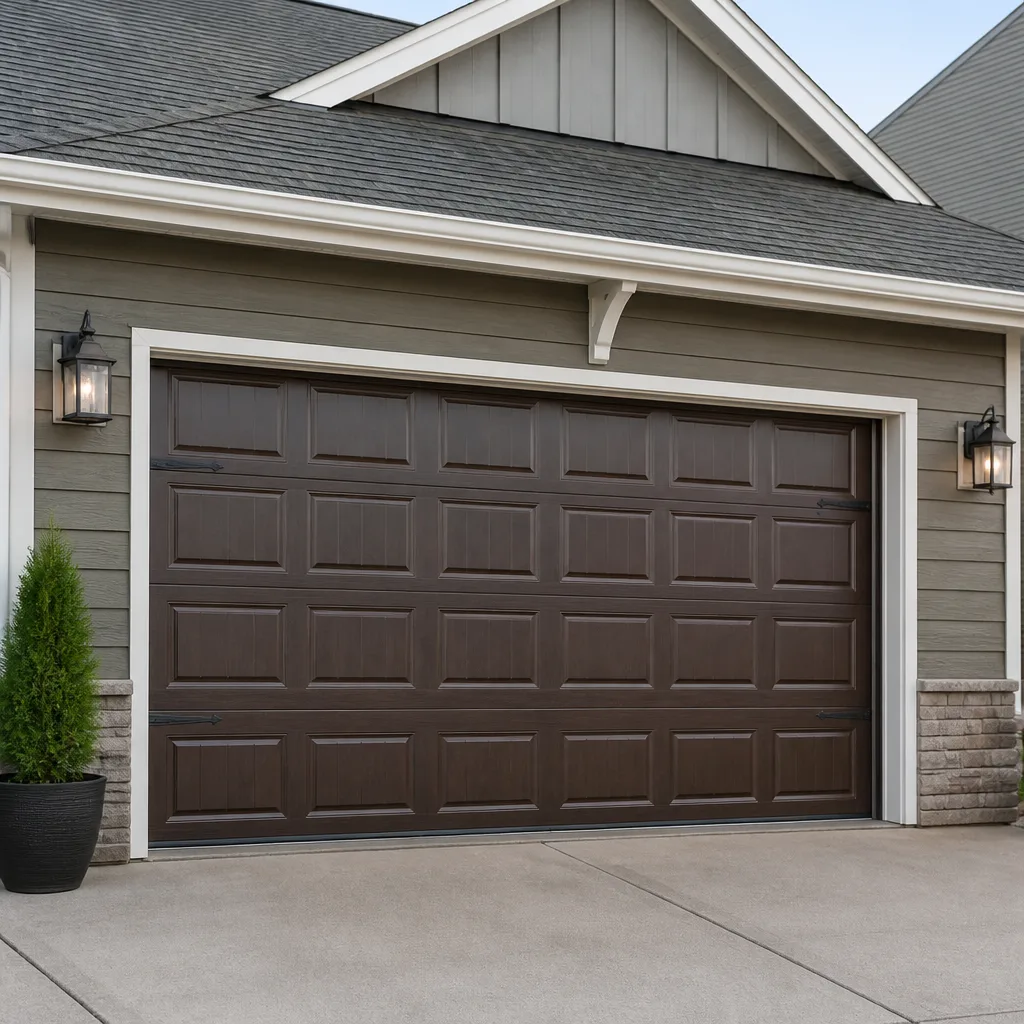 Raised-panel steel
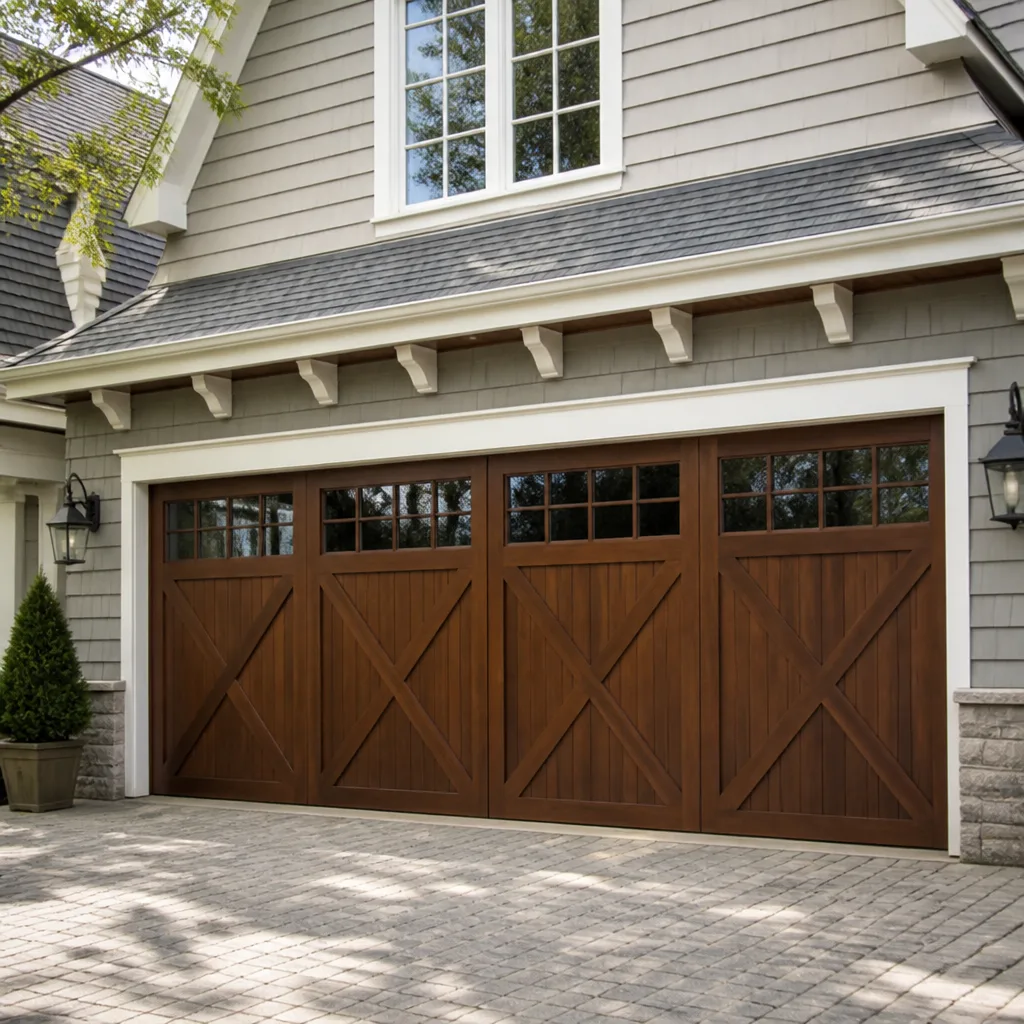 Carriage house
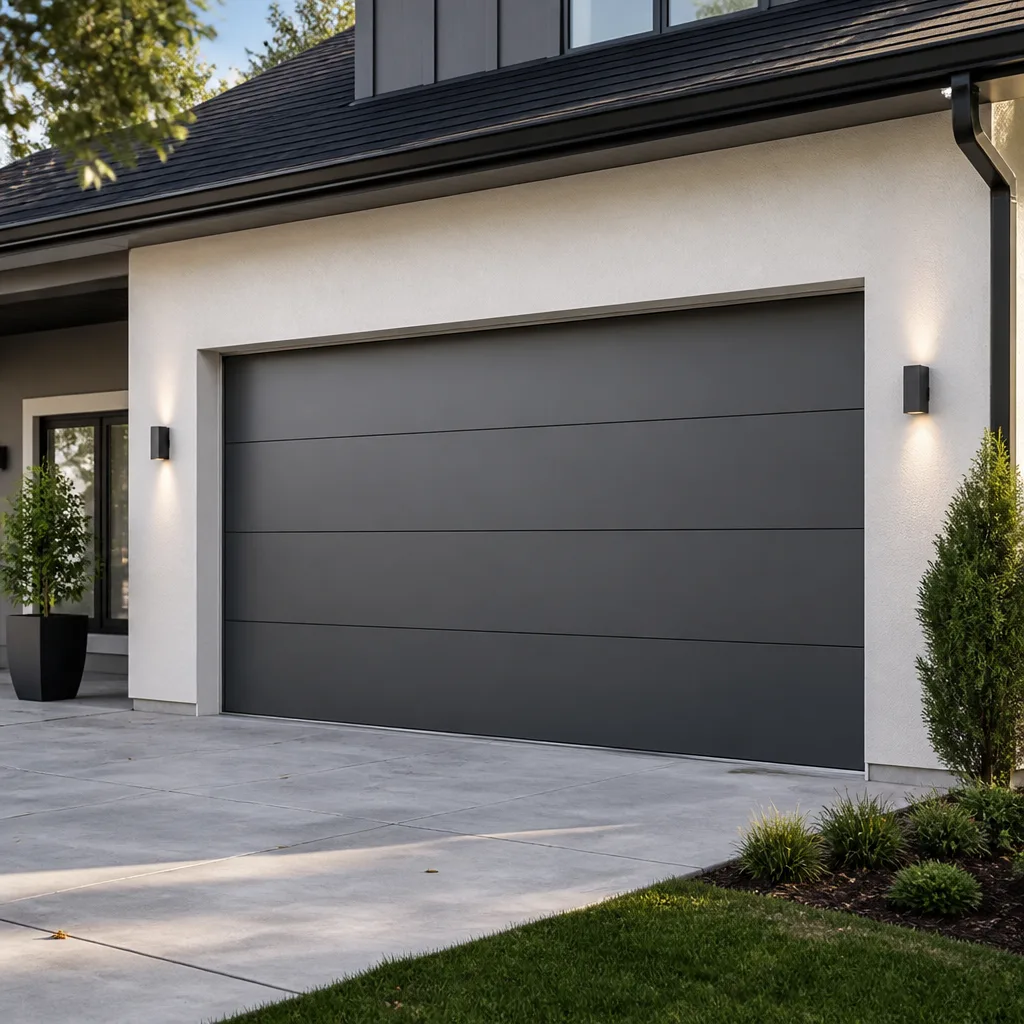 Modern flush
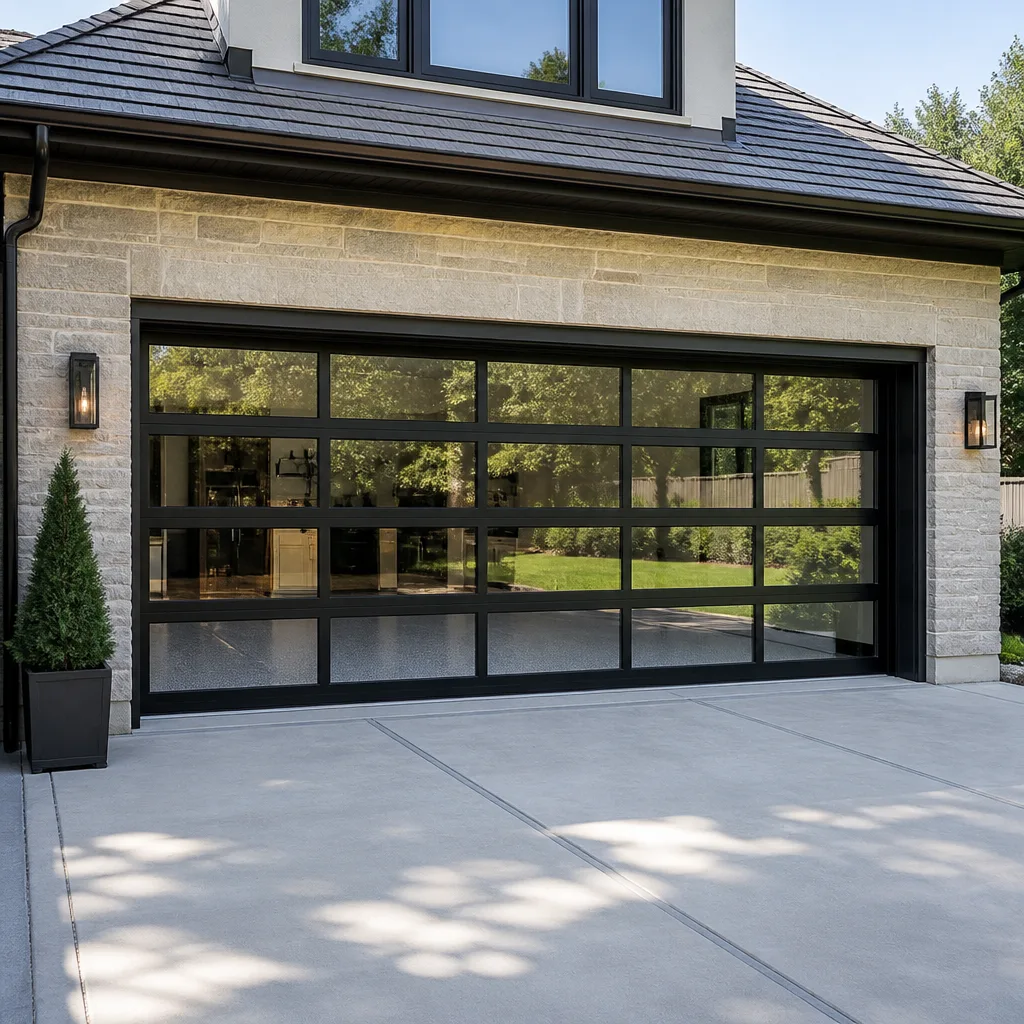 Full-view glass
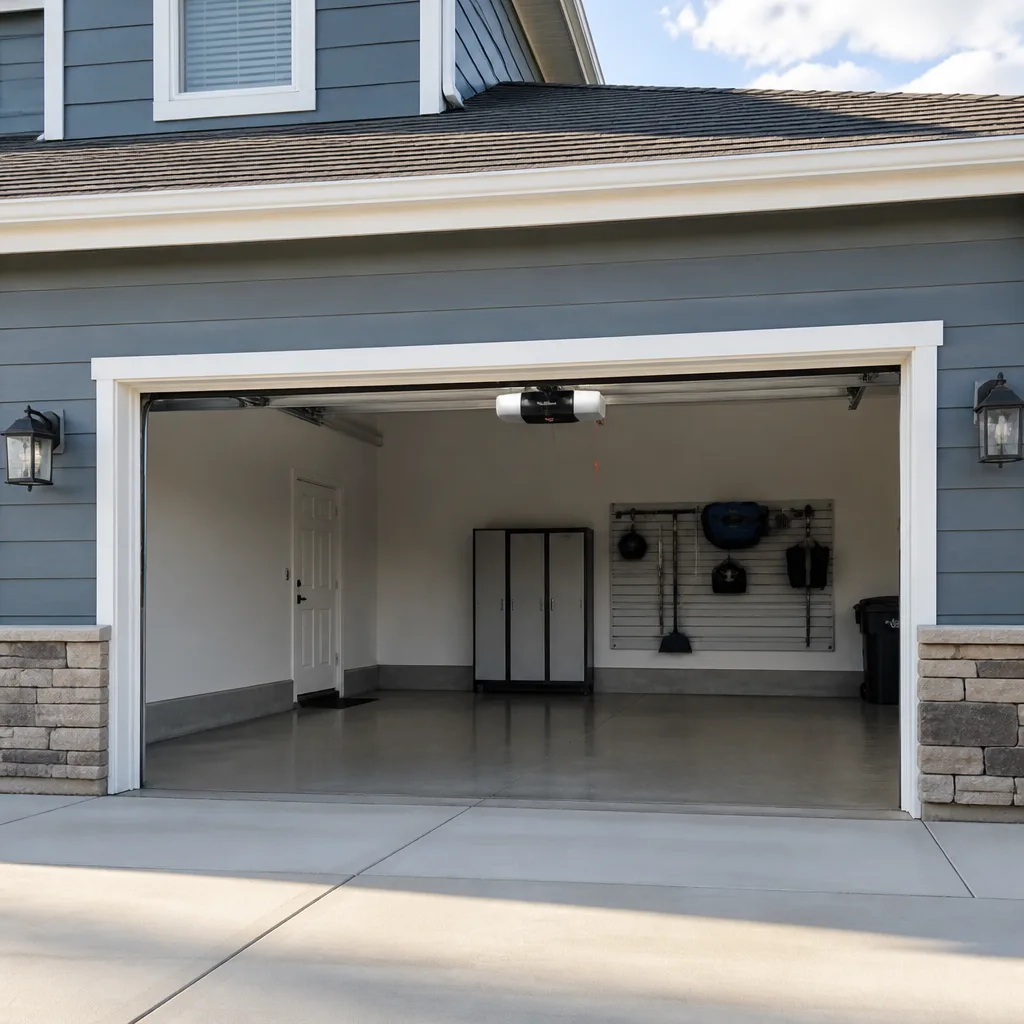 LiftMaster openers
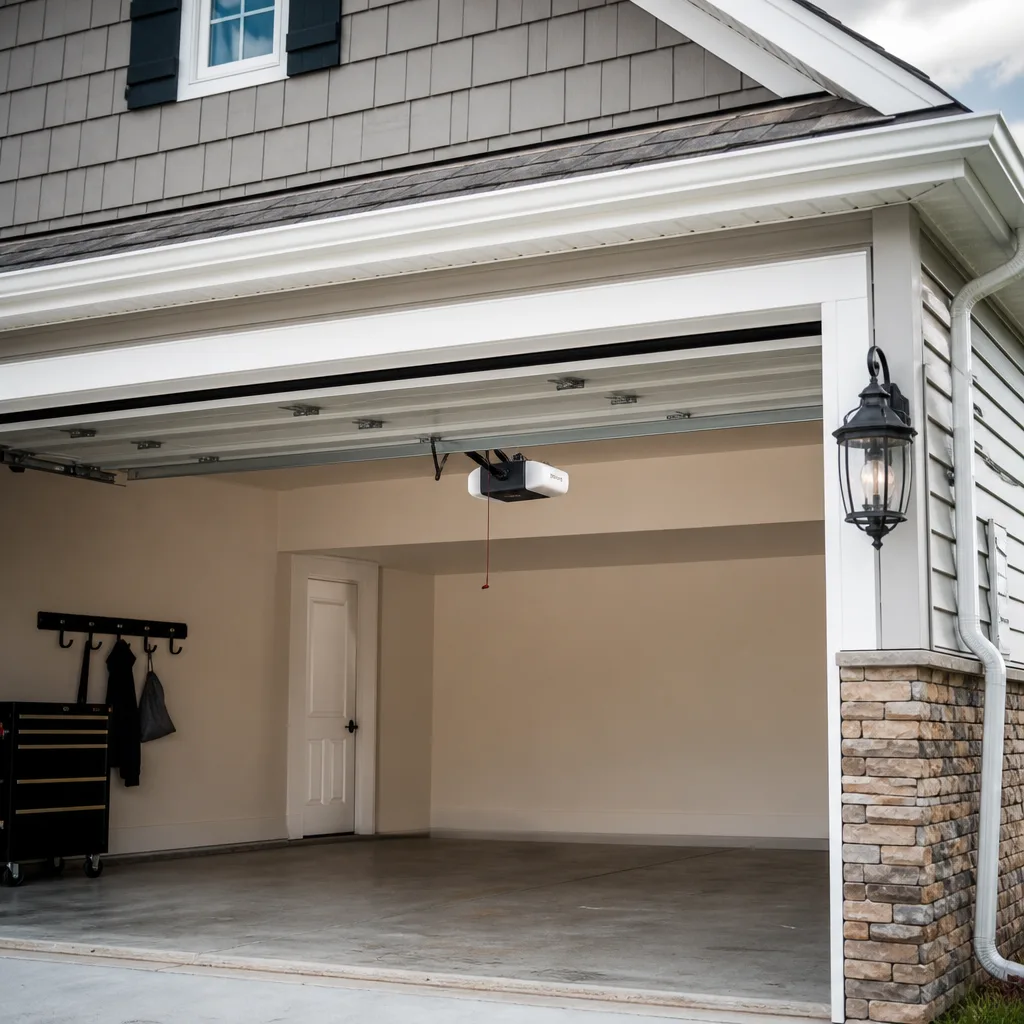 Chamberlain openers
Full 25-point door and opener safety check with every visit - springs, cables, rollers, tracks, and your LiftMaster or Chamberlain opener included
You get a price before we start. It does not change when the truck arrives.
Get your free estimateThe Complete Guide to Garage Door in Miami Beach
Miami Beach sits inside Miami-Dade County’s High-Velocity Hurricane Zone, one of only two such zones in the entire United States. A garage door that’s perfectly legal in Orlando can be dangerously non-compliant here. That one fact changes every decision you’ll make about your garage door, from the material you choose to the way it’s anchored to your home. This guide covers what Miami Beach homeowners actually need to know: how salt air eats hardware faster than expected, what a Miami-Dade product approval actually means, and how to think about your garage door as part of your home’s structural envelope rather than just an entry point.
Quick Answer
A garage door in Miami Beach must be Miami-Dade County product-approved for wind loads up to 175 mph or more, depending on your exact location and risk category. Beyond code, the real challenges are salt-air corrosion on hardware and humidity damage to panels and springs. The right approach is to match the door to your specific exposure, then commit to a maintenance schedule that accounts for the coastal climate. Top Notch Garage Door Repair works on the brand you already have, repair-first, across Miami Beach.
Styles & brands we work with
Table of Contents
- What the Miami-Dade HVHZ Means for Your Garage Door
- Salt Air, Humidity, and the Corrosion Timeline
- Hurricane-Rated vs. Miami-Dade Product-Approved: The Real Difference
- Materials That Hold Up in Miami Beach, and Materials That Don’t
- The Garage Door as Part of Your Home’s Envelope
- Specialist vs. Handyman vs. Big-Box Installer in Miami Beach
- A Coastal Maintenance Schedule That Actually Works
- Signs Your Garage Door Needs Repair or Replacement
What the Miami-Dade HVHZ Means for Your Garage Door
The High-Velocity Hurricane Zone designation isn’t a footnote. It’s the governing reality for every exterior opening on your home, and your garage door is usually the largest one. In Miami Beach, building code requires garage doors to resist specific wind pressures based on your home’s location, roof height, and exposure category. A door that meets Florida Building Code standards for inland areas may not come close to meeting Miami-Dade’s stricter requirements.
What this means in practical terms: the door itself, the tracks, the hinges, the brackets that hold the tracks to the wall, and the way the whole assembly anchors to your home all need to be rated as a system. You can’t just bolt a stronger panel onto old tracks and call it compliant. The entire assembly is tested and approved together.
We regularly see homes in Miami Beach where a previous owner installed a door that was never product-approved for this zone. Sometimes it was a budget decision. Sometimes an out-of-state contractor didn’t know the local code. Either way, the homeowner now has a door that looks fine from the curb but would fail a post-storm inspection or, worse, fail during the storm itself. When water gets through a failed garage door during a hurricane, it pressurizes the entire house from the inside, which is how roofs get blown off.
If you’re buying a home in Miami Beach, verifying the garage door’s Miami-Dade product approval should be on your inspection checklist. If you already own your home and you’re not sure about your door’s rating, a specialist can check the manufacturer’s label and the anchoring hardware. This is a good example of where the Top Notch Garage Door Repair home team can assess what you actually have before you spend money replacing something that might already be compliant.
Salt Air, Humidity, and the Corrosion Timeline
Here’s what nobody tells you when you buy a garage door in Miami Beach: the ocean is slowly eating your hardware. Salt air doesn’t just sit on the surface. It works into pivot points, hinge pins, spring coils, and cable strands. Add 75% average humidity, and you get a corrosion environment that accelerates the timeline on everything metal.
In our experience, standard zinc-plated hardware that lasts 15 years in Orlando can start showing serious rust in Miami Beach within five to seven years. That’s not a defect in the door. It’s geography. The salt in the air forms a mild electrolyte solution on metal surfaces, and the humidity keeps it active nearly year-round.
What fails first, typically:
- Cables: The strands corrode internally before the outside looks bad. A snapped cable under full door weight is dangerous.
- Springs: Torsion springs are under constant tension. Surface corrosion creates micro-pitting that can lead to premature failure.
- Hinges and rollers: These wear faster near the coast. Stiff hinges make the whole door work harder, which shortens the life of every component.
- Track brackets: The bolts and brackets connecting the track to the wall are exposed to the same salt air. If they corrode, the track can pull away from the wall under load.
The fix isn’t to avoid the coast. It’s to choose the right hardware and replace corroded components before they fail. Stainless steel hardware, sealed bearings, and galvanized track brackets all hold up better in this environment. When we repair a door in Miami Beach, we recommend corrosion-resistant replacements wherever available. It costs a little more up front, but it doubles or triples the service life of the hardware in this climate.
Hurricane-Rated vs. Miami-Dade Product-Approved: The Real Difference
These two terms get confused constantly, and the confusion can cost you thousands. A door that’s labeled hurricane-rated has been built to resist wind, but it may not have been tested and certified through Miami-Dade County’s product approval process. The Miami-Dade approval is a specific, documented certification with a Notice of Acceptance number that applies to that exact model, in that exact size, with that exact hardware configuration.
A Miami-Dade product-approved door has been impact-tested and cycle-tested. That means a lab launched a 2×4 at it at the speed of hurricane debris, and the door had to stay in place while remaining functional. The approval also covers the anchoring system, meaning the specific brackets and bolts that connect the door to your house have been tested with the door, not separately.
Some doors are marketed as hurricane-rated because they have reinforcing struts or thicker gauge steel. But if the manufacturer never submitted that model for Miami-Dade product approval, it won’t pass a building inspection in Miami Beach. The approval number is what matters. You can look up any product’s approval status in the Miami-Dade County product control database, and a reputable installer will provide the Notice of Acceptance number without hesitation.
If you’re getting a new door in Miami Beach, ask for the NOA number before you sign anything. If the installer can’t produce it, walk away. This applies whether you’re working with us or anyone else. The NOA is not a nice-to-have; it’s the legal requirement for the largest opening on your house.
Materials That Hold Up in Miami Beach, and Materials That Don’t
Material choice in Miami Beach is a different calculation than it is 30 miles inland. You’re weighing three forces at once: wind resistance, corrosion resistance, and heat tolerance. A material that’s strong in wind might corrode fast. A material that resists corrosion might warp in direct afternoon sun. Here’s how the common options actually perform on a coastal barrier island.
- Aluminum with marine-grade finish: Lightweight, naturally corrosion-resistant, and available in Miami-Dade product-approved configurations. Best overall choice for most Miami Beach homes. Watch for dents – aluminum dents more easily than steel.
- Galvanized steel with reinforced struts: Strongest wind performance when properly reinforced. Needs a quality paint or powder coat finish to resist salt air. Uncoated steel edges and hardware will rust within a few years here.
- Fiberglass: Doesn’t corrode, which sounds perfect for the coast, but it’s brittle on impact and fades badly in strong UV. Limited Miami-Dade product approvals. Usually not our first recommendation in Miami Beach.
- Solid wood: Beautiful, and some older Miami Beach homes have them, but wood doors absorb humidity, swell, warp, and need constant refinishing in this climate. They also rarely meet current Miami-Dade wind standards without significant reinforcement.
- Vinyl: Handles salt air well and won’t rot, but heat expansion can make panels bind in the tracks. Fewer approved configurations for high-wind zones.
Two of the manufacturers we service frequently, Clopay and Amarr, both produce lines that are specifically engineered and tested for Miami-Dade compliance. We recommend starting with what your home’s architecture actually needs, then narrowing to models from those manufacturers that carry the required NOA. The door you choose should look right on your house and hold up to what this specific beach environment throws at it.
The Garage Door as Part of Your Home’s Envelope
Most people think of a garage door as an entry point. In Miami Beach, it’s more useful to think of it as part of your home’s pressure envelope — and to plan ahead with a Garage Door Emergency Preparedness Guide for Miami Beach Homes. Your roof, your windows, your exterior doors, and your garage door all work together to keep the outside air outside. That matters for two reasons: hurricane performance and energy cost.
During a storm, a failed garage door doesn’t just let water into your garage. It lets wind pressure into the house. Once wind gets inside, it pushes against the roof from underneath, and that’s when structural failures cascade. The garage door is the weakest link in the envelope for most homes. That’s why Miami-Dade code treats it as a structural component, not just a convenience.
Day to day, the envelope matters for cooling. A garage door that doesn’t seal well lets hot, humid air in and conditioned air out, especially in attached garages. The room above the garage is frequently the hottest room in a Miami Beach house for exactly this reason. A well-sealed door with proper bottom seals and functional weatherstripping reduces that load more than most people expect.
When we evaluate a door in Miami Beach, we look at the whole opening: the door itself, the seals around the perimeter, the bottom seal’s contact with the concrete, and the condition of the jamb. A door can be in perfect mechanical condition and still fail as part of the envelope because the seals are shot. Fixing the seals is one of the cheapest, highest-return repairs on a coastal home, and it’s the kind of repair-first job we do regularly through our Garage Door Repair in Miami Beach service.
Specialist vs. Handyman vs. Big-Box Installer in Miami Beach
When something goes wrong with your garage door in Miami Beach, you have three basic options: a general handyman, a big-box retailer’s installation service, or a garage door specialist. If you’re weighing DIY vs Professional Garage Door: The Miami Beach Homeowner’s Decision Guide, the same principles apply. The differences matter more here than they do inland because Miami-Dade code compliance and coastal corrosion add layers of complexity that a generalist won’t catch.
A handyman can usually swap out a hinge or replace a remote battery. But diagnosing a door that’s binding on one side, or evaluating whether a rusted cable is safe to leave for another month, or determining whether your anchoring system meets current code – that’s outside the scope of what a multi-trade generalist should be touching. Garage doors are all we do. Every job we take is a garage door job, whether it’s a spring replacement, an opener issue, or a full installation. We’re not squeezing your door in between a bathroom remodel and a fence repair.
Big-box installers sell doors. That’s the business model. The installation is a delivery mechanism for the product. If your door needs a $40 repair, a big-box installer has no reason to tell you that because they don’t sell $40 repairs. We do. Our philosophy is repair when possible, replace when necessary. Pushing a Miami Beach homeowner into a new door when the existing one just needs new cables or a new spring isn’t the right way to do business.
A specialist also brings multi-brand fluency. We work on the brand you already have, whether that’s a Clopay door with a Chamberlain opener or a Wayne Dalton door with a Genie opener. A handyman who sees three garage doors a year doesn’t know the specific failure patterns of each manufacturer’s hardware. A specialist who works with LiftMaster, Chamberlain, Genie, Clopay, Amarr, Wayne Dalton, Craftsman, and Raynor equipment every week does. That’s the difference between a repair that lasts two years and a repair that lasts ten.
A Coastal Maintenance Schedule That Actually Works
Maintenance schedules are usually written generically. A garage door in Phoenix and a garage door in Miami Beach do not need the same care. Here’s a coastal-specific schedule that accounts for what salt air and humidity actually do in this environment.
- Every month: Visually inspect cables, springs, and hardware for surface rust. If rust is starting, catch it early – wire brushing and rust-inhibiting spray on hardware can buy you years.
- Every three months: Clean the door surface and the weatherstripping. Rinse salt residue off the tracks. Salt accumulates just from ambient air, even if you’re not directly on the water.
- Every six months: Lubricate hinges, rollers, and torsion springs with a silicone-based lubricant. Wipe the tracks clean, but don’t grease them – tracks should stay dry.
- Every year: Have a specialist check the spring tension, cable condition, and balance. In Miami Beach, a cable can look fine on the outside and be corroded internally. An annual inspection catches it before it fails.
- Before hurricane season: Test the door’s structural anchoring. Make sure the door closes completely and latches correctly. If you have a manually operated door, verify the locking mechanism works. June 1 is a good deadline every year.
The most common reaction we get from homeowners after a coastal inspection is surprise at how much salt has accumulated on hardware they never look at. The second most common is relief that we caught a cable or spring before it snapped. Annual maintenance in this climate isn’t a luxury. It’s the difference between a door that lasts 15 years and one that fails in seven.
Signs Your Garage Door Needs Repair or Replacement
Most garage door failures give you warnings. Ignoring them is how a $100 repair becomes a $1,200 replacement. Here are the warning signs that matter most in a coastal environment like Miami Beach.
- The door is visibly unbalanced: Open it halfway and let go. A balanced door stays in place. If it creeps up or down, the springs are losing tension or wearing out. This matters more in Miami Beach because salt corrosion accelerates spring wear.
- Grinding or squealing sounds: These usually mean rollers or hinges are binding. In a coastal environment, the cause is often corrosion in the bearings. Lubrication can help temporarily, but if the sound stays, the components need replacement.
- Rust on cables or springs: Cables and springs are under extreme tension. Visible surface rust in this climate means internal corrosion is already underway. These are not components to gamble on. A snapped torsion spring or cable releases a massive amount of energy and can cause serious injury.
- The door doesn’t seal at the bottom: If you can see daylight under the door, the bottom seal is worn or the door has shifted. In Miami Beach, a bad seal means hot, humid air gets in every single day, plus water during heavy rain.
- Slow or intermittent operation: If the door moves slower than it used to, or stops partway, start with the opener troubleshooting, but don’t assume it’s always the opener. A door that’s binding due to corrosion will overload a healthy opener and shorten its life.
- Dents or damage to panel edges: Salt air and humidity cause metal panels to rust from the edges, where damage has already exposed bare metal. Small dents along the edges become rust points fast in this climate.
If you see any of these, address them sooner rather than later. We provide Garage Door Opener Repair in Miami Beach for opener-specific issues and full door repair for everything else. The repair-first approach means we’ll tell you honestly if a fix will solve the problem, or if the door has reached the point where replacement makes more financial sense.
Common Mistakes to Avoid
- Installing a door without a Miami-Dade NOA: If the door doesn’t carry a Notice of Acceptance, it won’t pass inspection and it may fail during a storm. This is the most expensive mistake you can make in Miami Beach.
- Waiting too long to address rust: In this climate, surface rust on hardware turns into structural failure within a season or two. The time to deal with rust is the day you first see it.
- Lubricating with WD-40: It displaces moisture but doesn’t provide lasting lubrication for garage door components. In a humid environment, it washes off fast. Use a silicone-based garage door lubricant instead.
- Replacing a door when a repair would do: A noisy, slow, or slightly unbalanced door often just needs new rollers, hinges, or springs. Don’t spend $2,000 when a $200 fix gets the door back to working order.
- Using an offshore or generic replacement part: In a high-wind zone, the specific hardware configuration matters. A generic bracket that isn’t part of the approved assembly can compromise the door’s wind rating.
- Ignoring the garage door during home purchase due diligence: Most Miami Beach home inspections don’t deep-dive into garage door mechanics or wind compliance. If you’re buying, get a garage door specialist to do a separate assessment.
- Skipping annual maintenance because the door works fine: Garage doors fail when they’re not being watched. The annual inspection is when problems get caught before they become emergencies, and in a coastal environment, the timeline is shorter than elsewhere.
See the difference
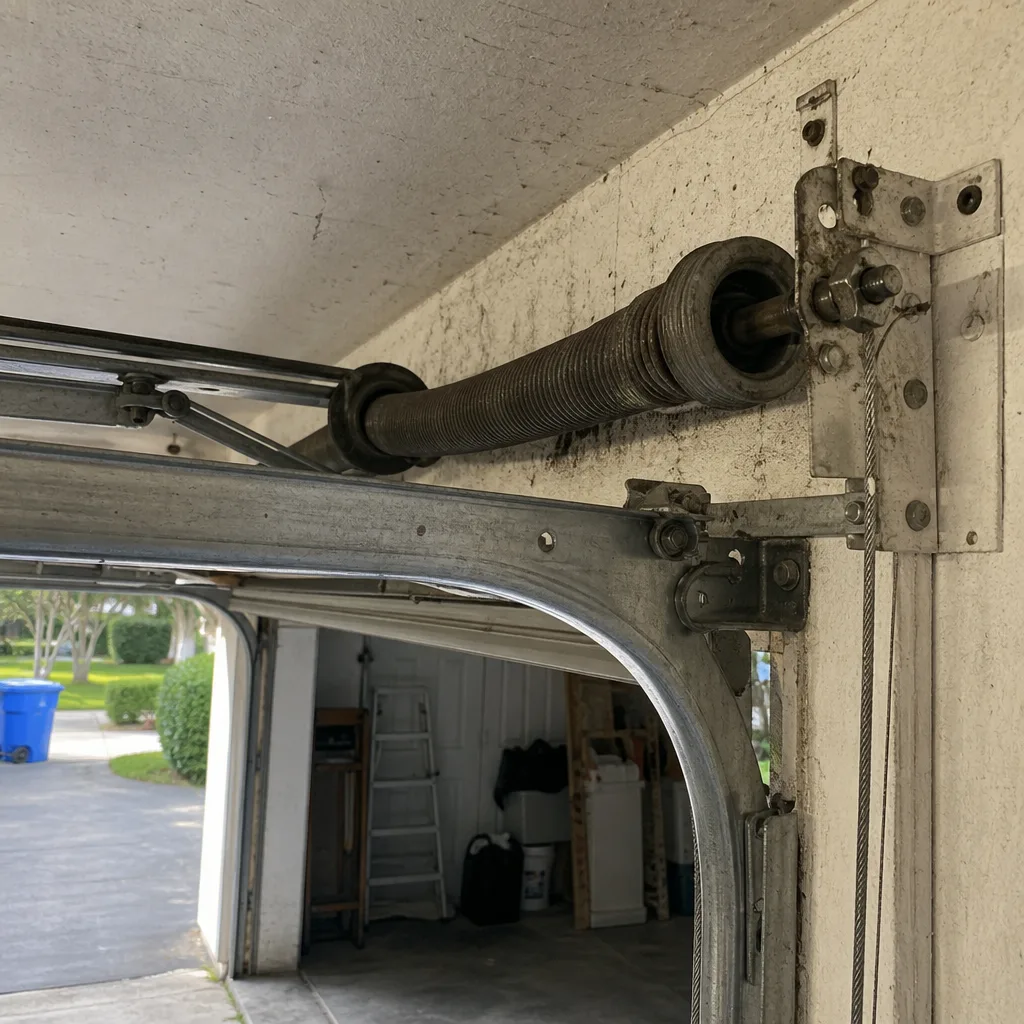 Before
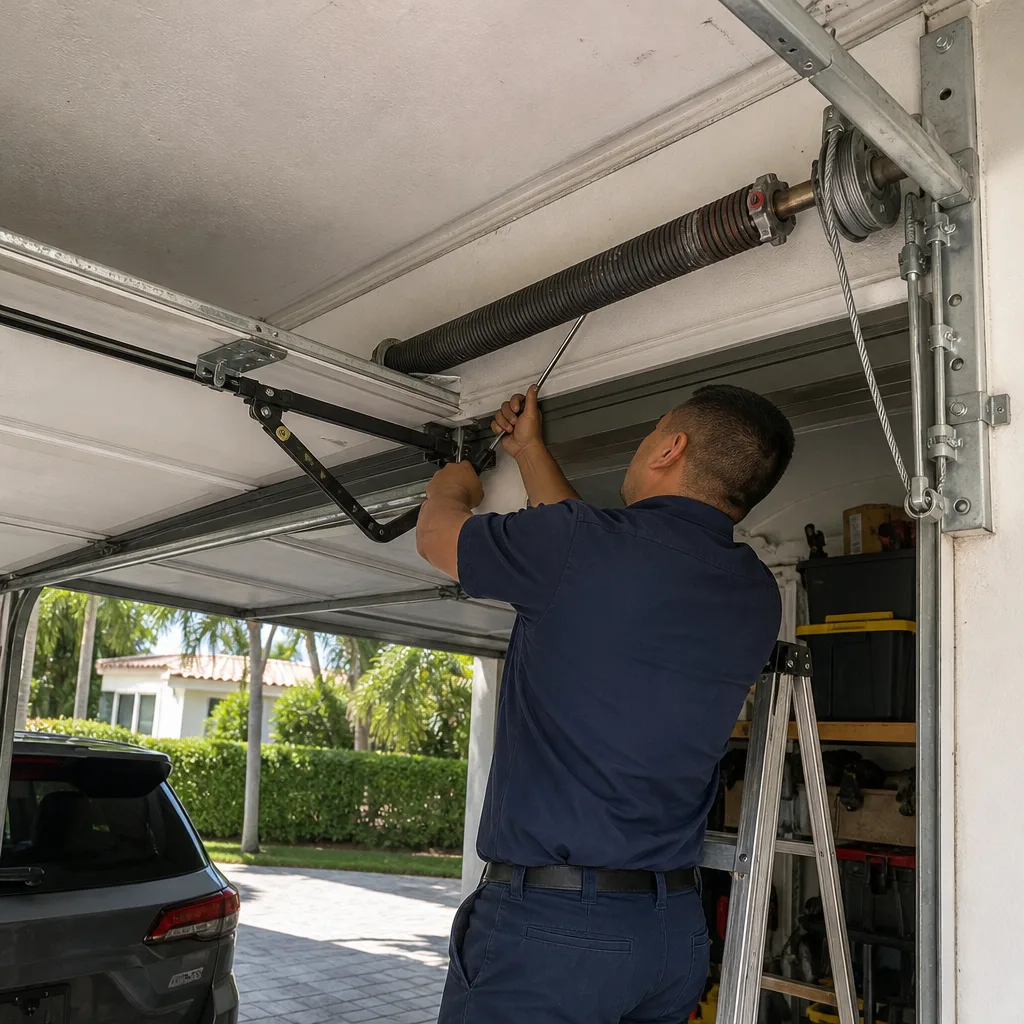 After
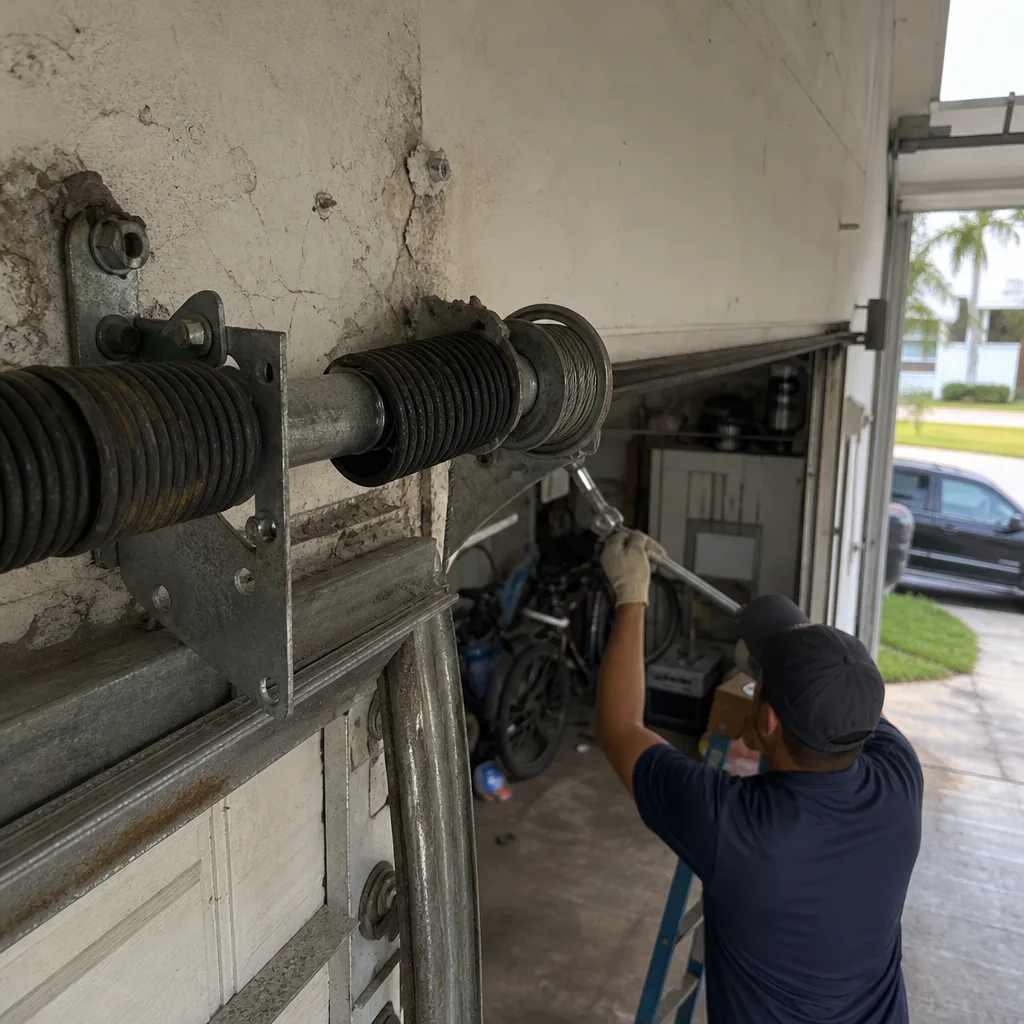 Before
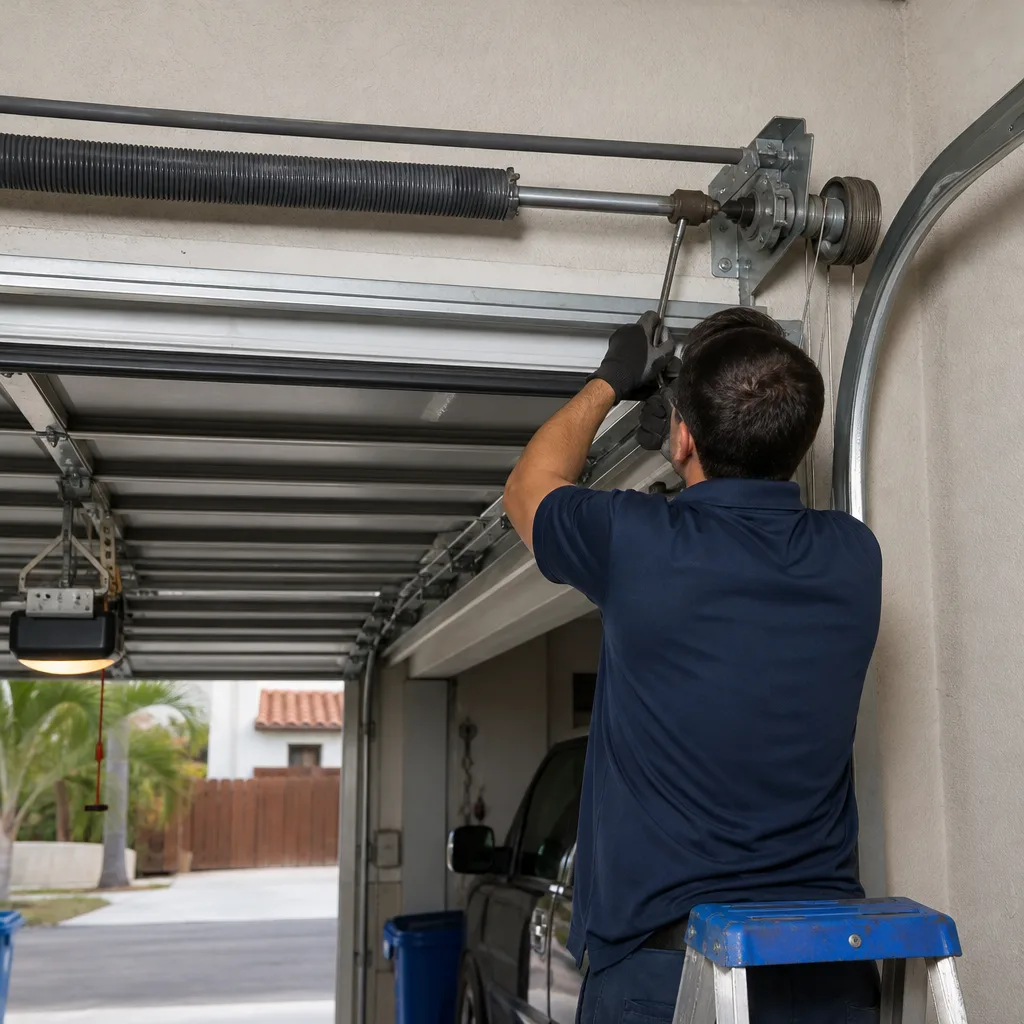 After
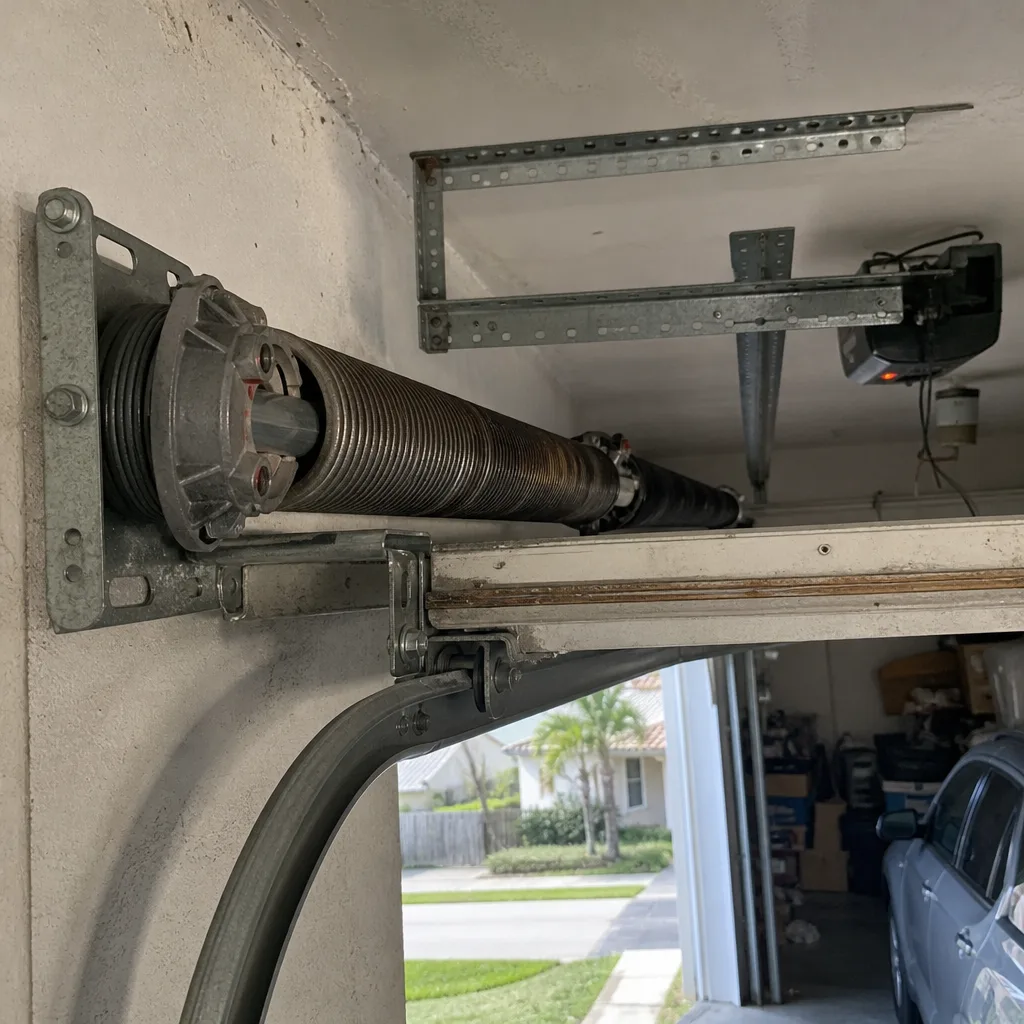 Before
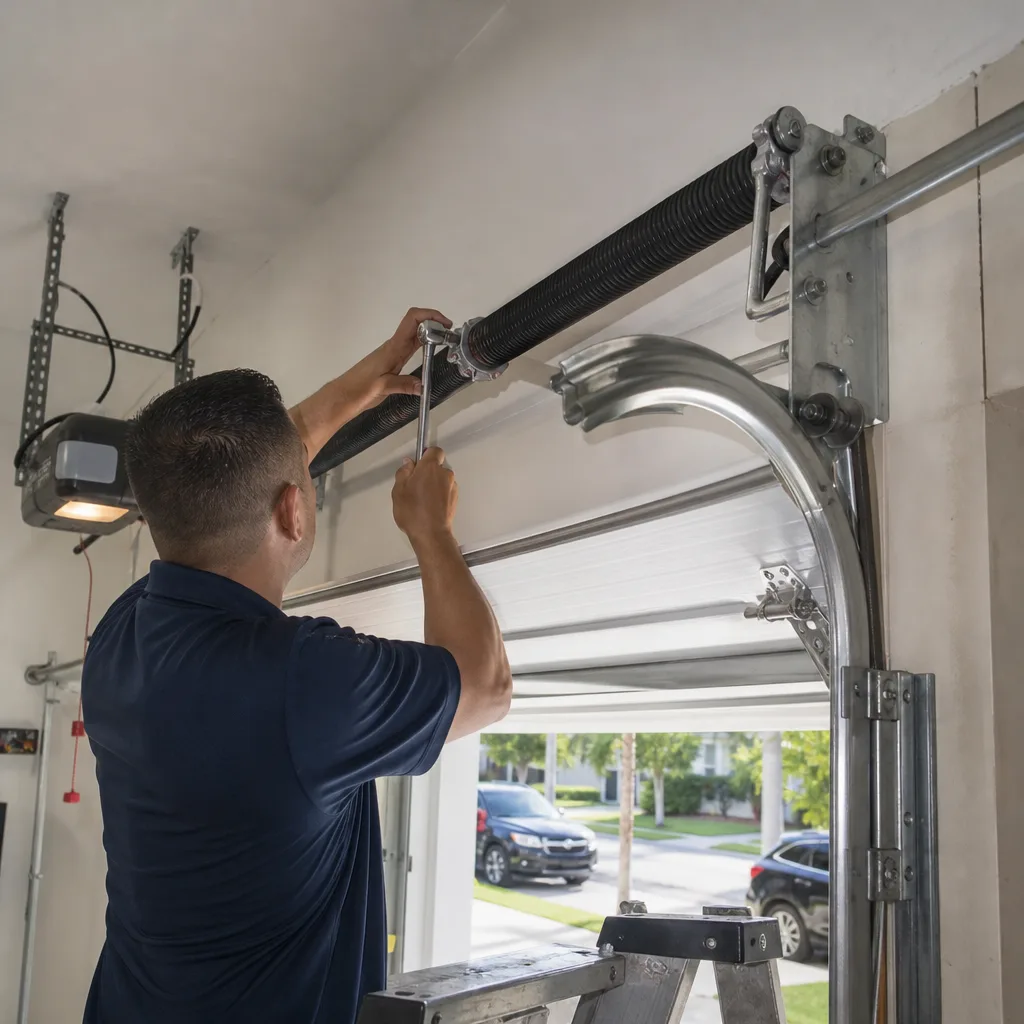 After
When to Call a Professional
Call a professional when the issue involves springs, cables, or anything under tension. These components store enough energy to cause serious injury or death if they fail while you’re working on them, and they fail without warning. If your door is unbalanced, if a cable is fraying or showing rust, or if a spring has snapped, this is not a DIY project. Call a specialist who works with this equipment every day and knows what a safe repair looks like.
Also call a professional when you’re buying a door in Miami Beach and need to navigate Miami-Dade product approvals. Code compliance isn’t something to guess at. Top Notch Garage Door Repair offers free estimates in Miami Beach – call (855) 754-6010 and we’ll assess the door you have and tell you what it actually needs.
Frequently Asked Questions
A new Miami-Dade product-approved garage door in Miami Beach typically costs between $1,800 and $4,500 installed, depending on material, size, insulation, and wind-rating requirements. For a deeper look at pricing factors, see our Garage Door Cost Breakdown: The Miami Beach Homeowner’s Reference for 2026. Aluminum doors with marine finishes run on the lower end of that range, while reinforced steel doors with higher wind-load ratings run on the higher end. The price is quoted and agreed before any work starts, and we recommend getting a written estimate before committing. Call (855) 754-6010 for an exact quote – estimates are free.
Yes, in many cases a garage door can be repaired rather than replaced, depending on the extent of the structural damage and whether the door’s wind-rating is still intact. If the panels are dented but the tracks, anchoring, and spring system are sound, panel replacement may be sufficient. If the anchoring pulled away from the wall or the tracks bent, more extensive work is needed. The repair-first approach means evaluating what’s salvageable before recommending a full replacement. Call (855) 754-6010 for an assessment.
A Miami-Dade product approval means the exact garage door model, in its exact size and hardware configuration, has been tested and certified by Miami-Dade County for wind resistance and impact resistance in the High-Velocity Hurricane Zone. The approval comes with a Notice of Acceptance number that must match the door you’re buying. Doors without this approval are not legal to install in Miami Beach and may not pass inspection.
Standard torsion springs in Miami Beach typically last five to seven years due to salt-air corrosion and humidity, compared to eight to ten years or more in inland Florida. Springs are rated for a specific number of cycles, not years, but the coastal environment accelerates surface corrosion that shortens their effective life. Using corrosion-resistant springs and lubricating them every six months extends their service window. If your springs are more than five years old and showing rust, it’s worth having them inspected before they fail.
Yes, garage door openers and doors are separate systems, and an opener can be replaced without touching the door itself. We work on openers from LiftMaster, Chamberlain, Genie, and Craftsman, and we can match a new opener to your existing door’s weight and balance requirements. If your door opens and closes manually but the opener has stopped working, an opener repair is usually the right call, and it’s a fraction of the cost of replacing the entire system.
No, a garage door with only a manual lock is not hurricane-compliant in Miami Beach. Miami-Dade product approval requires testing that proves the door can resist both wind pressure and flying debris impact without structural failure. A manual lock may keep the door closed, but it doesn’t provide the structural reinforcement required in the High-Velocity Hurricane Zone. If you’re unsure whether your existing door meets code, call (855) 754-6010 and we can check the labeling and anchoring.
The Bottom Line
A garage door in Miami Beach is infrastructure first and curb appeal second. The Miami-Dade High-Velocity Hurricane Zone means code compliance isn’t optional, salt air means hardware fails faster than homeowners expect, and the difference between a specialist and a generalist determines whether you get the right fix the first time. Match your door and hardware to the coastal environment, maintain it on a schedule that accounts for salt and humidity, and use repair-first thinking before jumping to replacement. When the door needs attention, we’re here. Top Notch Garage Door Repair works on the brand you already have, repairs when possible, replaces when necessary, and garage doors are all we do. For full installation guidance, see our Garage Door Installation in Miami Beach page.
Written by the team at Top Notch Garage Door Repair, serving Miami Beach since 2014. Explore more guides & resources on our blog.