
Last updated October 30, 2026
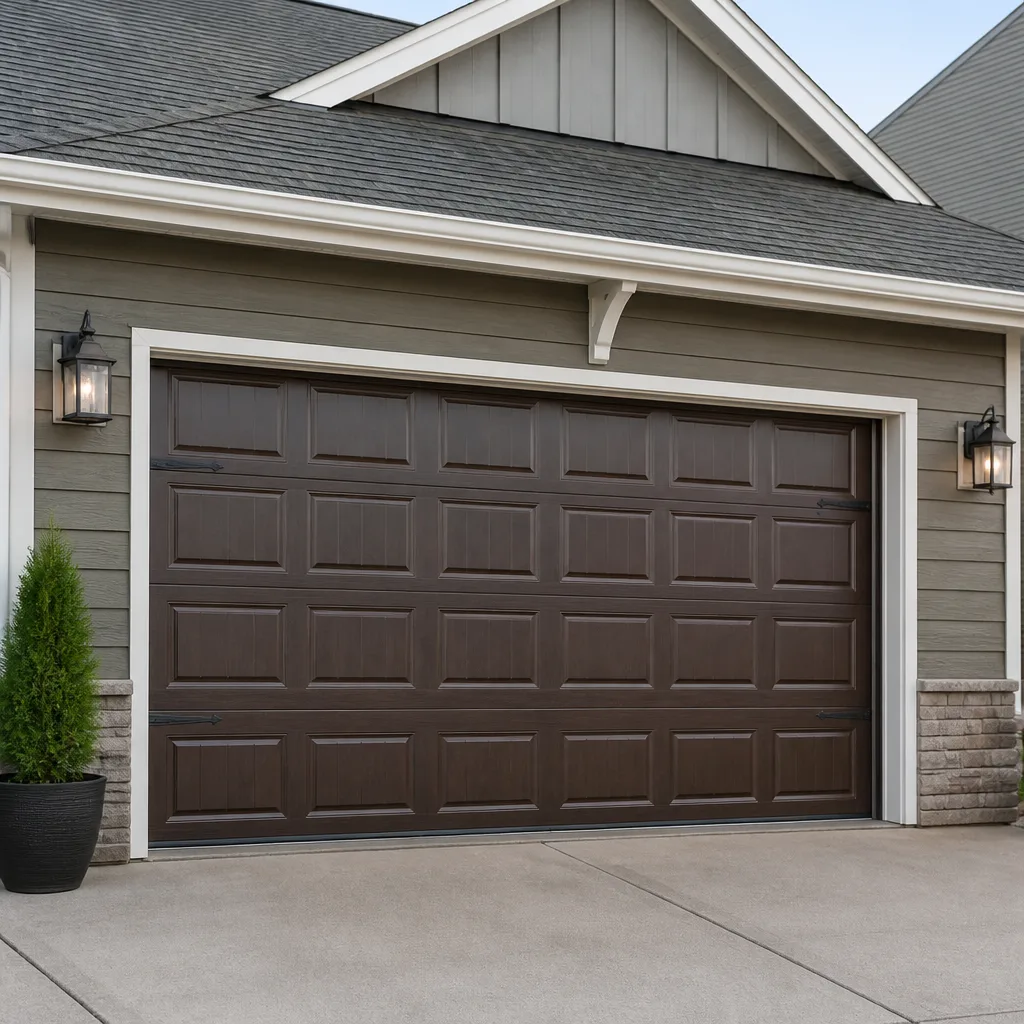 Raised-panel steel
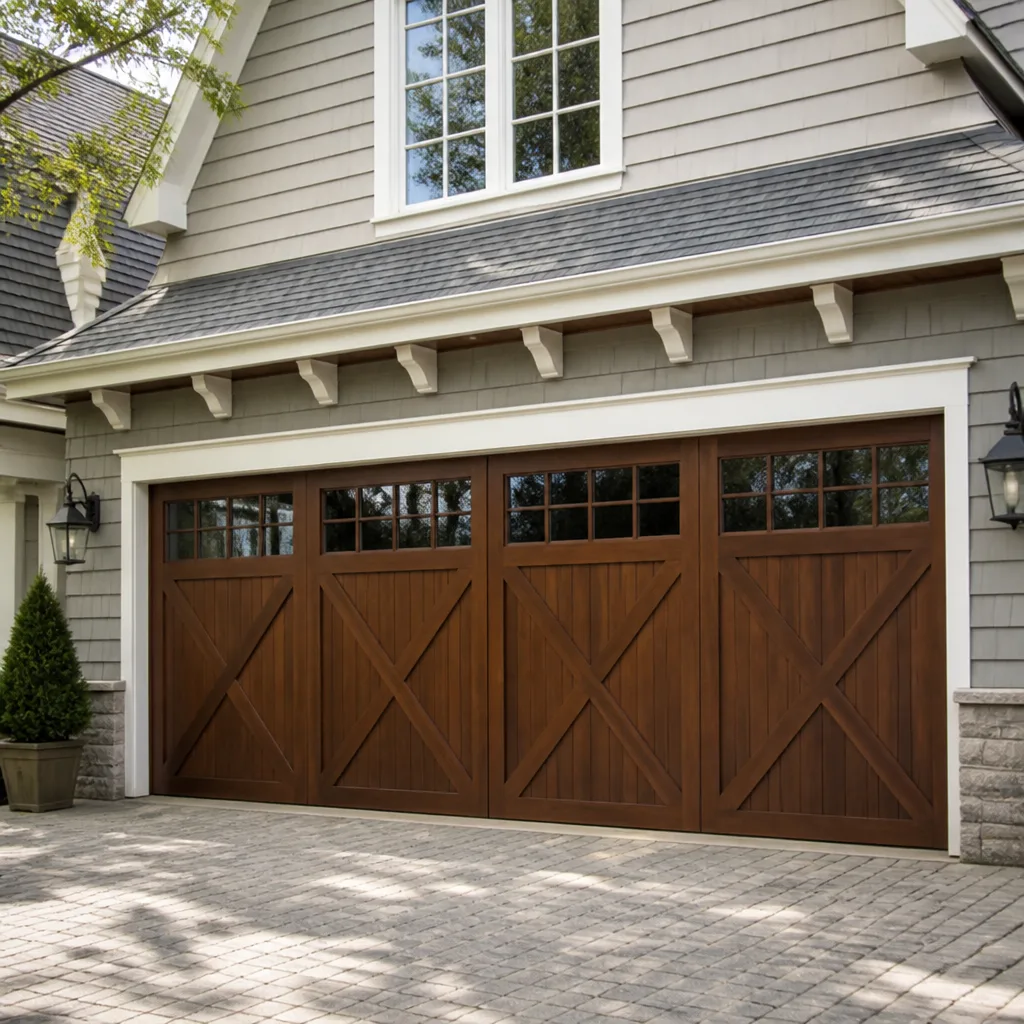 Carriage house
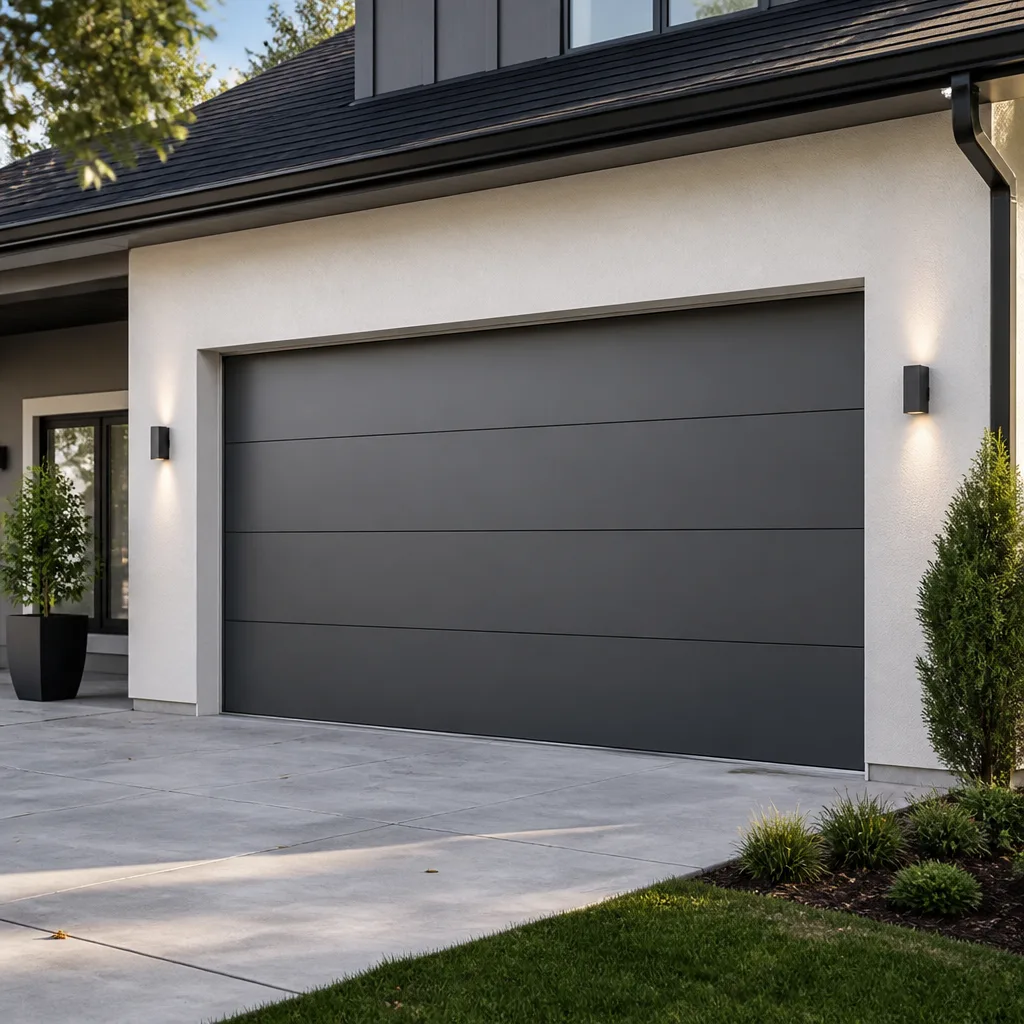 Modern flush
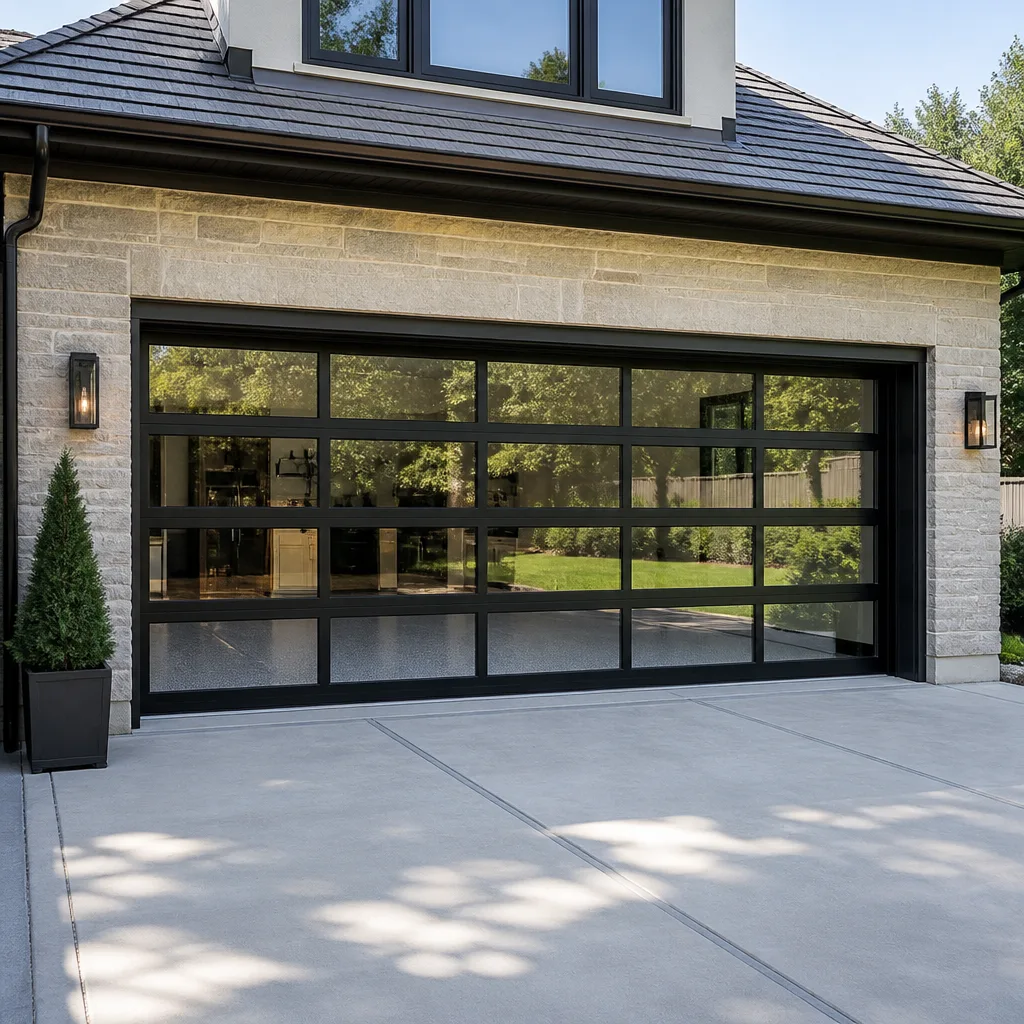 Full-view glass
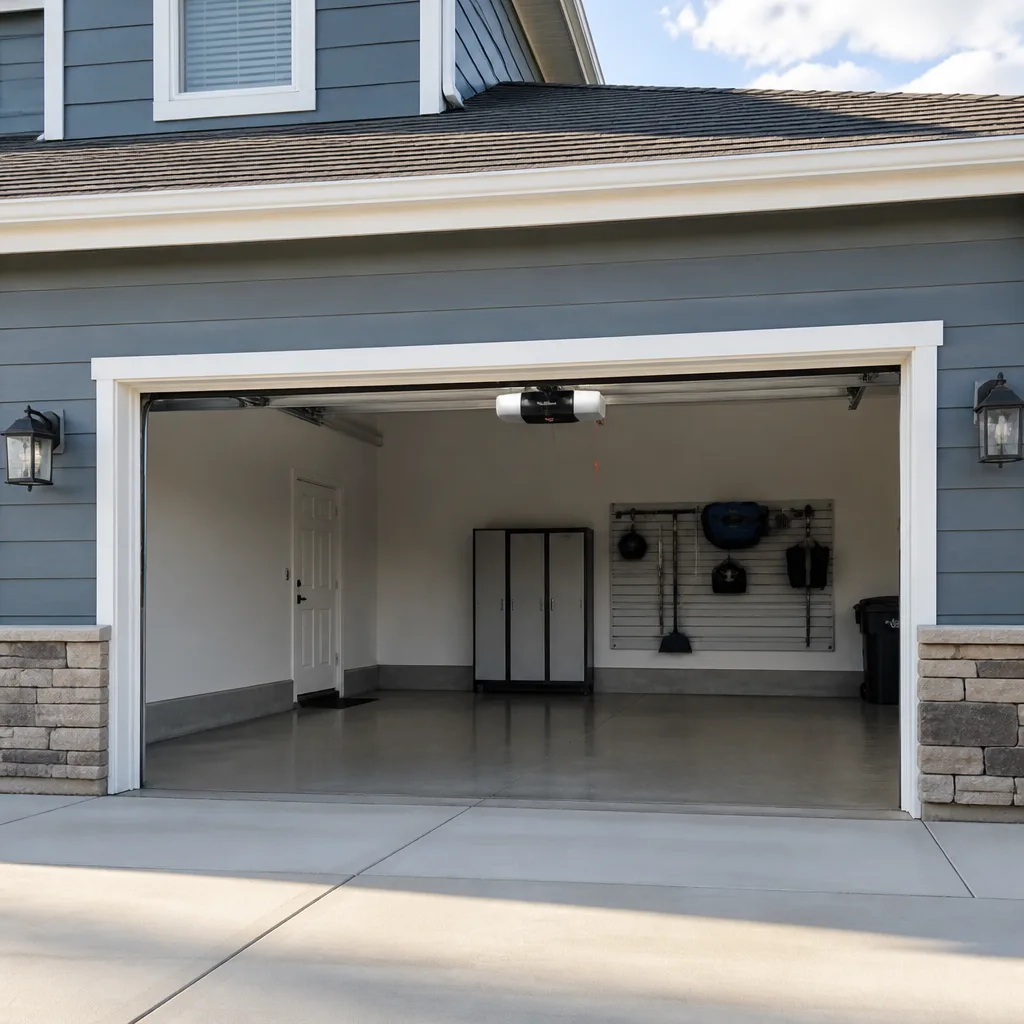 LiftMaster openers
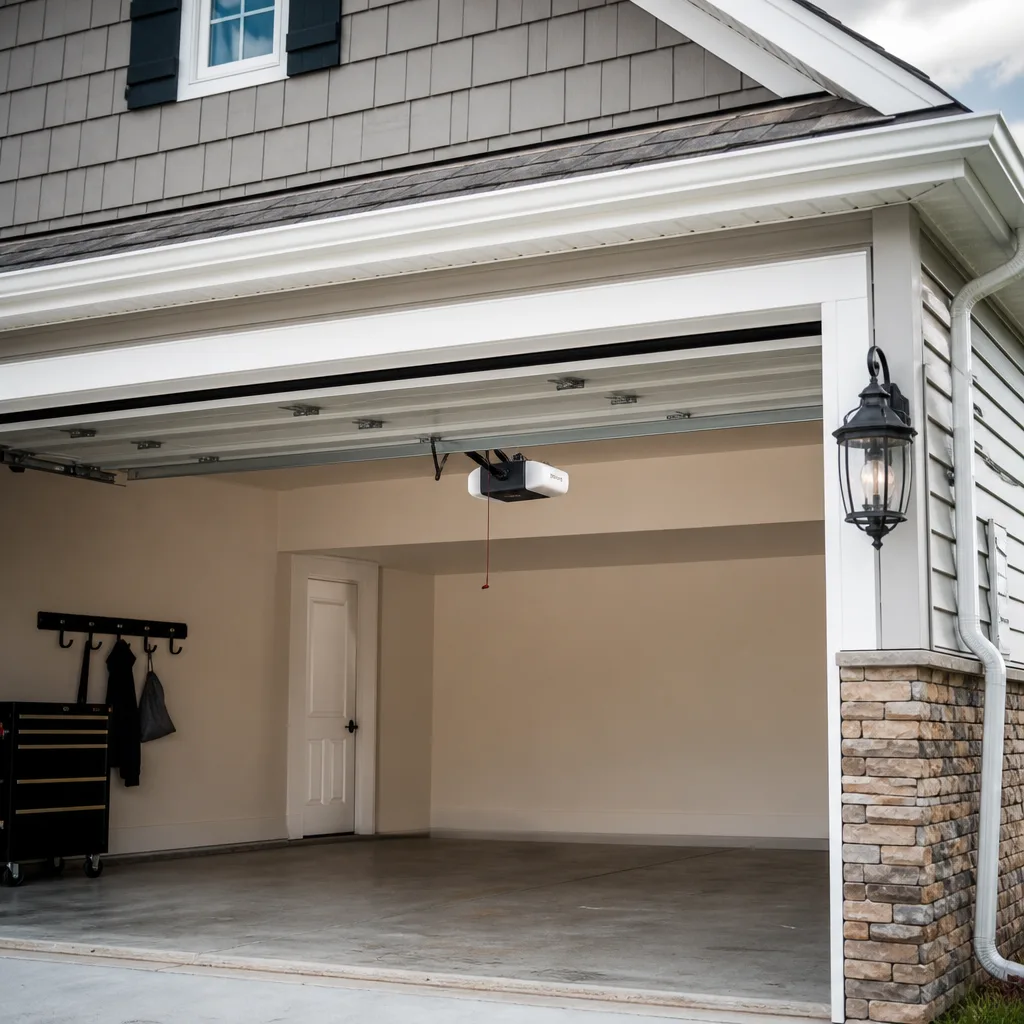 Chamberlain openers
Full 25-point door and opener safety check with every visit - springs, cables, rollers, tracks, and your LiftMaster or Chamberlain opener included
You get a price before we start. It does not change when the truck arrives.
Get your free estimateGarage Door Emergency Preparedness Guide for Miami Beach Homes
During Hurricane Irma, garage door failures were one of the leading causes of whole-home pressure loss in South Florida. The mechanism is straightforward: a double-wide garage door is the single largest opening in most Miami Beach homes, and when wind gets underneath it, the pressure differential can lift the roof in under eight seconds. Emergency preparedness here isn’t just about getting the car out before a storm. It’s about keeping the house intact. This guide covers everything from mechanical failures that trap your car inside to storm protocol that protects the entire structure, written specifically for Miami Beach’s wind load requirements, flood zones, and the unique construction styles from North Beach to South of Fifth. For Garage Door Repair Troubleshooting: Common Problems and How to Fix Them, see our dedicated troubleshooting guide.
Styles & brands we work with
Quick Answer
Garage door emergencies in Miami Beach fall into two categories requiring completely different responses: mechanical failures (broken springs, snapped cables, opener malfunctions) where you can use the manual release to operate the door, and storm-related failures where a damaged or unsecured door becomes a structural threat to your entire home. Before any hurricane, every Miami Beach homeowner should know how to operate their manual release cord, have a pre-vetted 24/7 repair contact ready, and understand that a garage door rated for Miami-Dade wind loads does not automatically secure itself during a storm. See Garage Door Permits, Codes & Inspections in FL: What You Need to Know to verify your door meets current requirements. The single most important preparation is knowing your door’s wind load rating and whether it has a bracing system installed.
Table of Contents
- The Two Categories of Garage Door Emergencies in Miami Beach
- How to Use Your Manual Release During a Power Outage
- Pre-Storm Protocol: What to Actually Do Before a Hurricane Watch
- Evaluating Whether a Damaged Door Should Be Operated or Locked in Place
- Post-Storm Damage Assessment: Structural vs. Cosmetic
- How to Vet a 24/7 Emergency Repair Contact Before You Need One
- Common Mistakes to Avoid
- When to Call a Professional
- Frequently Asked Questions
- The Bottom Line
The Two Categories of Garage Door Emergencies in Miami Beach
In fifteen years of working on garage doors across Miami Beach, we’ve learned that every emergency fits into one of two boxes. Understanding which box you’re in determines everything about how you respond.
Category 1: Mechanical failures. A broken torsion spring, a snapped cable, an opener that stops responding. These are inconvenient, sometimes dangerous, but they don’t threaten the rest of your home. The door might be stuck open, stuck closed, or stuck halfway. Your immediate concern is whether you can get your car out. The answer, in most cases, is yes, through the manual release. These failures follow no seasonal pattern in Miami Beach. We see them in February as often as August. Salt air accelerates corrosion on springs and cables in beach-adjacent neighborhoods like North Beach and Mid-Beach, so coastal homes may see mechanical issues more frequently than inland areas. Our Garage Door Repair Maintenance Checklist for Miami Beach Homeowners helps you stay ahead of these problems.
Category 2: Storm-related structural failures. This is a different animal entirely. A garage door that fails during or after a hurricane is not just blocking your car. It’s an open wound in your home’s envelope. When wind enters through a failed garage door, the interior pressure rises and pushes against the roof. The roof lifts. Then water follows. This is why Miami-Dade County building code treats garage doors as structural components with specific wind load requirements. A $400 door that meets code, properly installed and braced, can save a $400,000 home from catastrophic failure. Conversely, a door that looks fine but was never rated for coastal wind loads becomes the liability you didn’t know you had.
Every emergency response decision flows from this distinction. If the problem is mechanical, your job is to operate the door safely and call a specialist. If the problem is structural, your job is often to leave the door where it is and secure it in place until a professional arrives.
How to Use Your Manual Release During a Power Outage
The manual release is a red cord hanging from the opener rail, usually within arm’s reach above your car. Pulling it disengages the opener from the door, allowing you to operate the door by hand. In a power outage, this is how you get your car out or secure your home. It sounds simple. In practice, under stress, people make mistakes that trap cars inside at the worst possible moment.
- Close the door first if possible. If the power goes out while your door is open and you need to leave, you must close the door manually to re-engage the opener later. This is the step most people skip. They pull the release cord, drive out, and leave the door open because they couldn’t figure out how to close it. Now their home is exposed.
- Pull the cord straight down until you hear a click. That click is the release engaging. The door is now in manual mode. On LiftMaster openers, the release mechanism is located on the rail. On Genie units, it may be on the carriage itself. The motion is the same: straight down, not sideways.
- Lift the door using the handles, not the top edge. If your door doesn’t have handles, grip the lowest panel edge away from the hinge line. Lift using your legs, not your back. A balanced door should lift with modest effort. If it feels impossibly heavy, stop. The springs have likely failed, and you’re lifting the full weight of the door, which can be 150 to 300 pounds depending on size and material.
- To re-engage, pull the cord toward the opener and run the opener. Most modern openers re-engage automatically on the next cycle. Pull the cord toward the opener until you feel it seat, then press the wall button. The opener carriage will grab the release mechanism on its own. If it doesn’t catch, the door position is slightly off. Adjust the arm and try again.
The common mistake that traps cars inside: people pull the release while the door is open and then try to close it by hand. If the door has a broken spring or cable, the door drops uncontrolled. An uncontrolled door falling from six feet can cause serious injury. If the door doesn’t feel controlled when you lower it, do not force it. Call a professional and leave the door in whatever position it stops. It’s better to have a car stuck than a crushed hand.
If you need Garage Door Repair in Miami Beach after wrestling with a manual release that won’t cooperate, the problem is usually a broken spring or a misaligned track, both of which are fixable without replacing the entire door. But the diagnosis matters, and it takes someone who works on doors daily to tell the difference in five minutes.
Pre-Storm Protocol: What to Actually Do Before a Hurricane Watch
Here’s what surprises most Miami Beach homeowners: you should NOT leave your garage door open before a storm to let water drain or air circulate. The myth that an open door relieves pressure and prevents damage is exactly backwards. An open garage door during a hurricane is a wind tunnel into your home. Wind gets in, pressure builds, roof goes.
What you should actually do when a hurricane watch is issued for Miami Beach:
- Close the door and keep it closed. This is non-negotiable. The door is your home’s largest single wall during a storm. Treat it accordingly.
- Check that the door is fully seated with the bottom seal making contact across the full width. Gaps under the door allow water intrusion and reduce the door’s structural integrity under wind pressure. If you see daylight under the closed door, adjust the travel limit on the opener or have the door serviced before the storm arrives.
- Test the manual release once. You want to know it works and you want to feel how the door operates by hand. Do this before the storm, not during the outage. Pull the release, lift the door a few inches, lower it, re-engage. If it doesn’t re-engage smoothly, fix that now.
- Remove loose items from the garage floor and perimeter. During a storm, water and wind can move things around. A loose garden rake becoming a missile inside your garage is avoidable. Clear the path from your car door to the garage door in case you need to move the car in a hurry.
- If you have a brace system, install it. Miami-Dade approved garage door bracing kits are not decorative. They transfer wind load from the door to the jambs and floor, dramatically reducing the chance of door failure. If you have one, use it. If you don’t have one and you live in a flood zone or within two miles of the ocean, get one. This is not an optional upgrade on the barrier island.
- Take a photo of the door from inside and outside. Pre-storm documentation makes post-storm insurance claims vastly easier. Ten seconds now saves hours later.
Homes west of Alton Road that sit in higher elevation zones face the same wind exposure as oceanfront condos. Miami Beach is a narrow island, and there’s no meaningful wind break from the bay side. Pre-storm protocol doesn’t vary by neighborhood nearly as much as people assume.
Evaluating Whether a Damaged Door Should Be Operated or Locked in Place
After a storm passes, or after any impact, the first question is whether to operate the door at all. The wrong answer turns a $300 repair into a $3,000 replacement, and sometimes a safety incident in between. Here’s how to make that call.
Operate the door if:
- The door is flush across its full width, no gaps larger than a quarter inch at the seams.
- Both spring assemblies are intact with no visible separation or loose parts.
- The cables on both sides are taut and seated in the drums at the top of the track.
- The door moves up and down by hand with even resistance and no binding sounds.
- You tested the opener and it lifts the door smoothly without hesitation or grinding.
Lock the door in place and call a professional if:
- You see daylight through the door panels where panels have separated from each other or off the track.
- One side of the door sits noticeably lower or higher than the other when open.
- You hear scraping, scraping, or grinding when testing the opener manually.
- You see a frayed or snapped cable hanging loose from the drum.
- You see visible rust-through at the bottom panel corners, which weakens the door’s anchor point during high winds.
- The door buckled inward at the center under wind load, which means the structural integrity is gone and replacement is the only safe option.
If any of these apply, don’t try to force the door. A door that’s been structurally compromised can collapse suddenly, and a 16-foot door falling off its track weighs more than you want to be under. Call a garage door specialist. We service every major brand in Miami Beach, including Garage Door Installation in Miami Beach when replacement is the only honest answer, and we’ll tell you the difference on the phone based on photos before we ever roll a truck.
Post-Storm Damage Assessment: Structural vs. Cosmetic
Most people can’t tell the difference between a garage door that needs repair and one that needs replacement. You don’t need to become a door engineer. You need to know which questions to answer and when to call someone who sees storm damage weekly during peak season.
Cosmetic damage is anything that affects appearance but not function or structural integrity: dents in the panel that don’t crack the material, paint peeling, minor scratches, rust speckling. These are eyesores. They are not emergencies. You can live with them indefinitely without risk.
Structural damage is anything that affects the door’s ability to perform its job: hold wind, keep water out, or operate safely. This includes panel separation at the seams, track misalignment, spring or cable damage, bottom seal failure that allows water intrusion, or any dent deep enough that the panel has deformed at its edges. A dent in the middle of a Clopay or Amarr panel is likely cosmetic. A dent at the seam between panels that leaves a visible gap is structural. That gap is a water entry point, a wind entry point, and eventually a point of total failure.
The honest assessment of most storm damage on Miami Beach doors is that once the wind has deformed a panel enough to break the seam, the door is not coming back to its rated capacity. Repairs can be made: a technician can replace a lower panel, re-align a track, or reset a spring. But the door’s ability to meet its original Miami-Dade wind load rating is compromised when the structural members have bent. That’s not a sales pitch. That’s what the engineering data says.
We work on doors from Genie, Wayne Dalton, and Raynor constantly in Miami Beach, and we’ve replaced panels on all of them. The difference between a door worth repairing and a door worth replacing comes down to whether the structural members are intact. If the stiles and hinges are straight and the panels are in good shape, we repair it. If the wind load has been compromised, we say so plainly. For those situations, our repair-first philosophy means we never push a replacement when a repair will restore the door to safe operation. And when a replacement is unavoidable, we quote the job honestly the same day.
How to Vet a 24/7 Emergency Repair Contact Before You Need One
The worst time to find a garage door contractor is at 2 a.m. after a storm, when every scamming opportunist with a pickup truck and a set of channel locks is cruising the streets looking for desperate homeowners. This is a known problem in Miami Beach across every home service trade. The solution is to vet your contact before the emergency exists. Here’s how.
First, call during normal business hours and ask two simple questions: “Do you service the brand of door I have?” and “Can you walk me through what you’d do on a typical emergency call?” A specialist answers the first question directly with manufacturer names. A handyman may say “all of them” with no specifics. The difference matters, because a Genie opener failure and a LiftMaster opener failure may require different diagnostic approaches, and Wayne Dalton’s TorqueMaster spring system works completely differently from standard torsion springs.
Second, ask about the repair-first philosophy. You want a company that tries to repair before recommending replacement. Listen for the phrase “repair when possible, replace when necessary” or something equivalent. If they tell you a broken spring always requires replacing the entire door, that’s a red flag. A torsion spring replacement is a standard, same-day repair on doors from every major manufacturer.
Third, have your door information ready before you call during an actual emergency. Write down the manufacturer name, the approximate age of the door, and take photos of the damage. A legitimate contractor will want this information and will give you a rough estimate over the phone before dispatch. An opportunistic contractor shows up first, quotes later, and the quote is usually outrageous because you’re stranded. If they won’t give you a number before dispatching, keep looking.
When you’ve found your contact, save them in your phone with the door information included in the contact notes. When the emergency hits, you’re not scrambling. You dial, you send photos, you get a real answer. That’s the difference between a bad week and a manageable one.
Common Mistakes to Avoid
- Leaving the garage door open before a hurricane. This old folk remedy meant to prevent wind damage actually causes it. An open door lets wind penetrate the home, pressurizing the interior and lifting the roof. Close it and forget the folklore.
- Pulling the manual release while the door is open and broken. If a spring has snapped, the door has no counterbalance. Pulling the release under those conditions means the full weight of the door is now in your hands, with predictable consequences. Assess before you release.
- Assuming all garage doors meet Miami-Dade wind load code. Doors installed before the post-Andrew code upgrades, or doors installed by out-of-area contractors, may not meet current standards. Verify your door’s rating. In Miami Beach, especially on the bayside and oceanfront, this is not paperwork. It’s physics.
- Ignoring a door that sticks or scrapes on the way up or down. A door that doesn’t run smooth is telling you something. That grinding or binding is a mechanical component failing slowly. The repair is always cheaper before it fails completely.
- Hiring a general handyman for garage door work. Garage doors are the heaviest moving object in your home and operate under extreme spring tension. If a handyman says they can handle it, ask what manufacturers they’ve trained on. If the answer is vague, call someone else.
- Discarding the owner’s manual for the opener. That manual contains the exact instructions for disengaging and re-engaging your specific model. In an emergency, you want that manual in a drawer, not in the recycling bin. Take a photo of the manual release page and save it on your phone.
- Putting off a spring replacement because the door still opens. A door with a weakened spring may still operate, but it’s working on borrowed time. When it goes, it often goes at the worst possible moment, like the day you need to evacuate for a storm.
When to Call a Professional
Call a garage door specialist when the problem involves any of the following: a broken torsion or extension spring, a snapped or frayed cable, a door off its track, a buckled or separated panel, an opener that won’t respond to the wall button or remote, or any situation where the door doesn’t move smoothly and evenly under manual operation. These are not DIY projects. The spring tension in a residential garage door system can reach several hundred pounds, and releasing that tension incorrectly causes serious injury every year. Call a professional, get the assessment, and make the fix. Top Notch Garage Door Repair offers free estimates in Miami Beach. Call (855) 754-6010 and we’ll walk through the problem with you before we ever dispatch a truck.
Frequently Asked Questions
The most dangerous part is the double-wide panel itself, because it’s the largest single opening in the home. If it fails, wind rushes in, the house pressurizes, and the roof becomes a sail. The springs and cables are functional hazards, but the structural panel is the threat during a hurricane in Miami Beach.
Emergency garage door repair in Miami Beach typically runs $180 to $400 for common issues like broken springs or snapped cables, depending on the door type and single vs. double spring configuration. Storm-related structural repairs or panel replacement can exceed $800, and full door replacement starts higher. Every reputable company quotes before starting work. If someone won’t give you a number before beginning, end the conversation.
In our experience, most post-hurricane garage doors in Miami Beach that have sustained wind damage need at least partial replacement of the impacted panel or hardware. Cosmetic dents can be left alone, but once a panel separates at the seam or the door buckles, the structural integrity is compromised. The decision comes down to whether the door can still function safely. We repair what we can and tell you honestly when replacement is the only safe option.
It won’t, unless you have a battery backup unit installed. Standard openers run on household current and stop working the moment the power goes out. Battery backup openers from LiftMaster, Chamberlain, and Genie are available and worth considering for Miami Beach, where hurricane season brings outages every year. Regardless of what opener you have, the manual release is your fail-safe, and you should know how to use it before the power fails.
No. Boarding a garage door by nailing plywood over the exterior is generally ineffective and creates a false sense of security. The proper solution is a Miami-Dade approved bracing system or a door rated for current wind load code. A properly braced and sealed door is the standard; a sheet of plywood is not. Talk to a garage door specialist if your door is not rated for the current standards, especially in flood zones on the island.
Check the power source first. Confirm the breaker is on and the opener is plugged in. If it still won’t move, pull the manual release and try to lift the door by hand. If it’s heavy or won’t move, the springs or track are damaged and you should call a specialist rather than forcing it. If it moves by hand but the opener won’t engage, the issue is the opener. For Garage Door Opener Repair in Miami Beach, it’s often a failed logic board or a gear-and-sprocket assembly that’s stripped, and usually repairable without replacing the whole unit.
The Bottom Line
Garage door emergencies in Miami Beach demand two different playbooks. Mechanical failures require knowing your manual release and having a reliable repair contact. Storm-related failures require prevention: a door that’s rated for county wind load, sealed at the bottom, braced if possible, and understood before the wind arrives. The homeowner who does these things sails through storm season. The one who doesn’t learns an expensive lesson about the largest opening in their house. You can always reach us through Top Notch Garage Door Repair home for a free estimate, honest diagnosis, and no pressure toward replacement when a repair does the job. The biggest mistake is waiting for the emergency to find out who you’re going to call. Have the number ready. Have the door ready. And know the difference between a door that needs fixing and a door that needs replacing.
Written by the team at Top Notch Garage Door Repair, serving Miami Beach since 2014.
See the difference
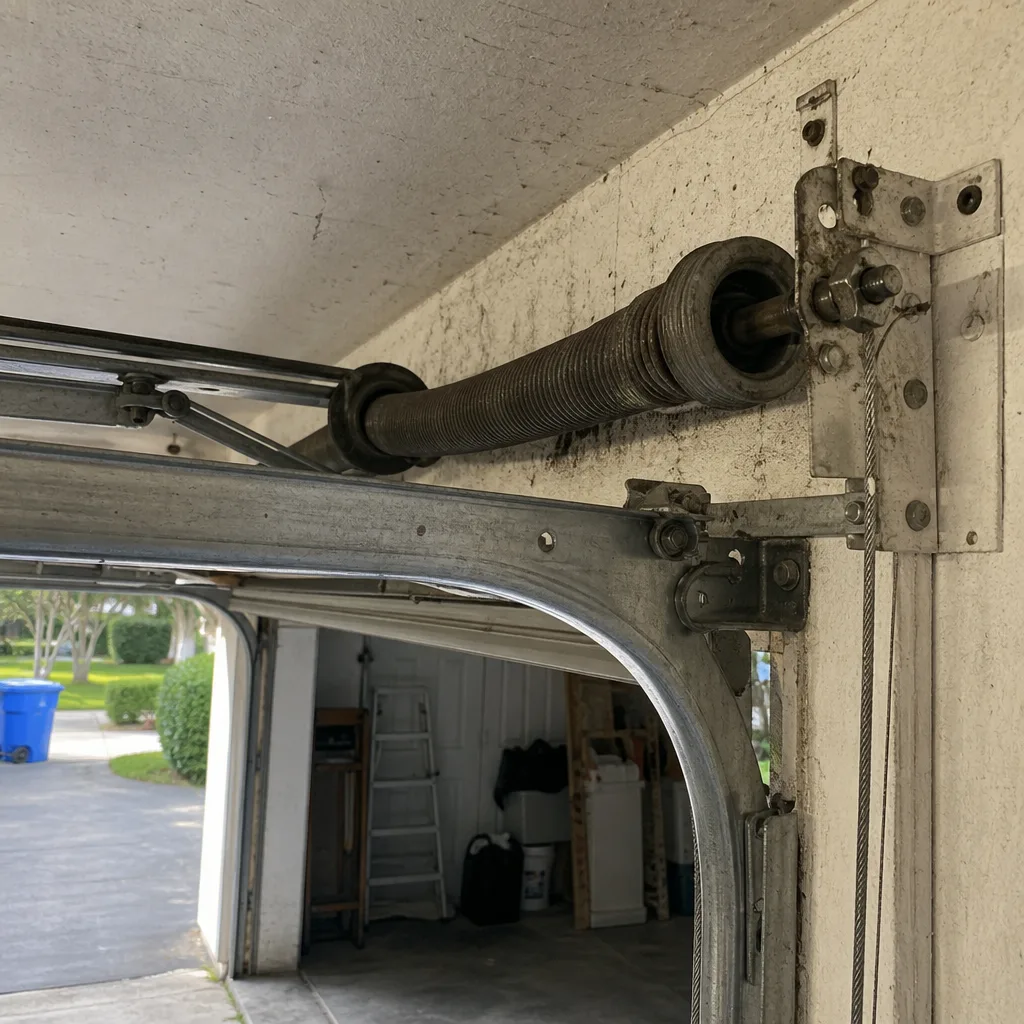 Before
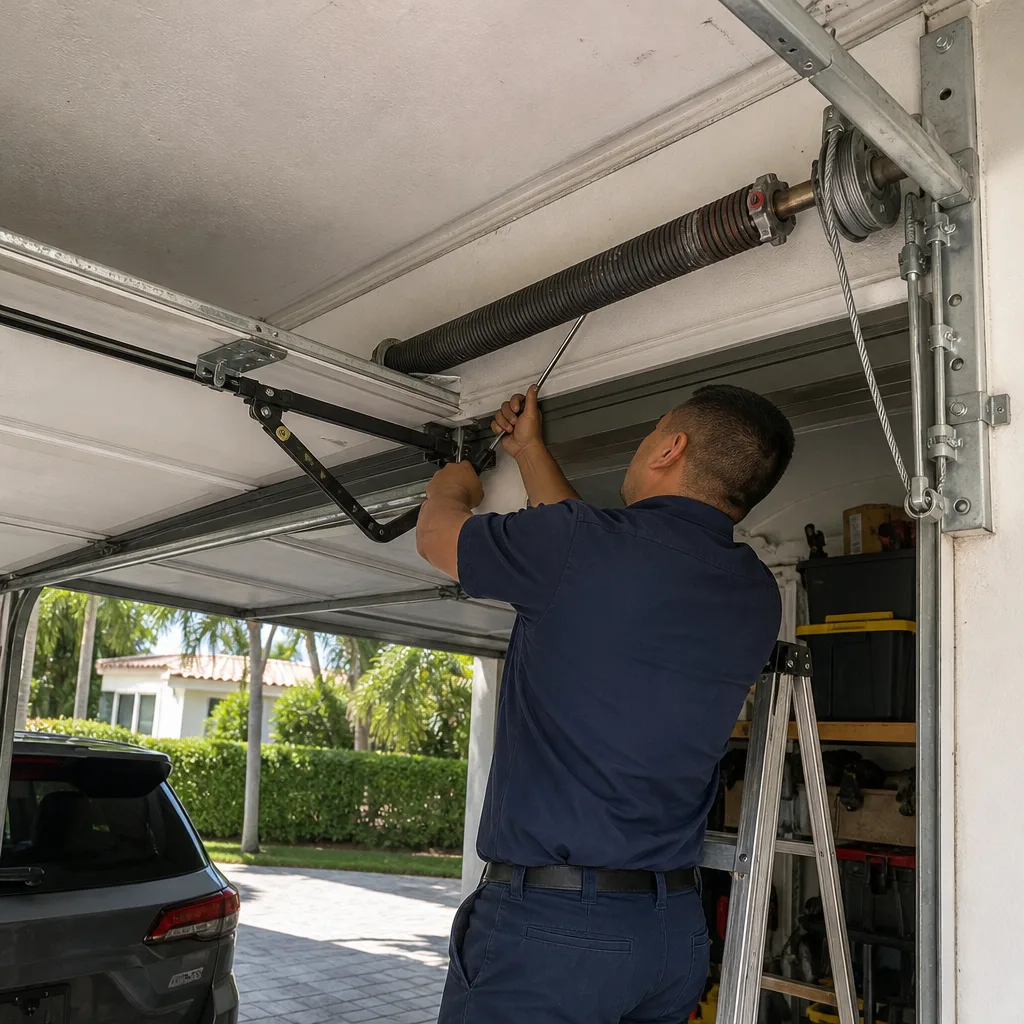 After
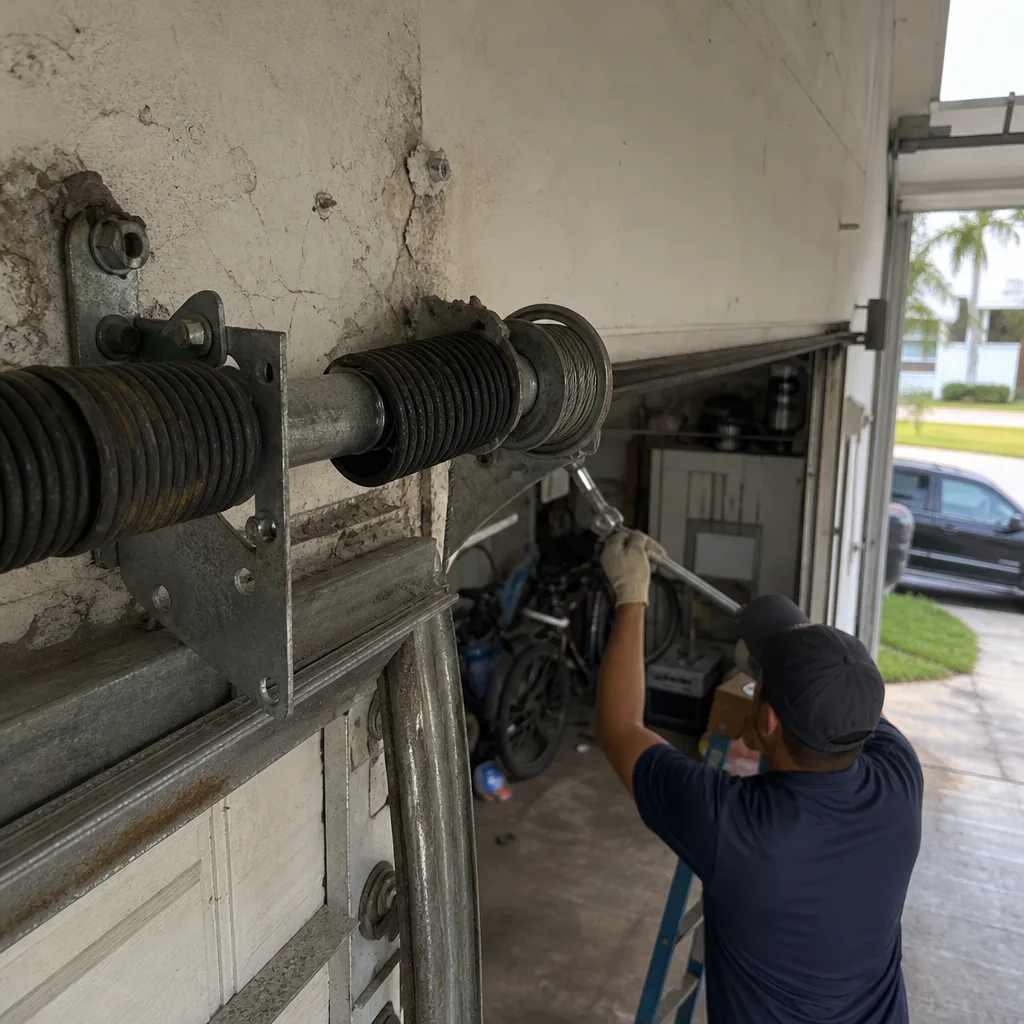 Before
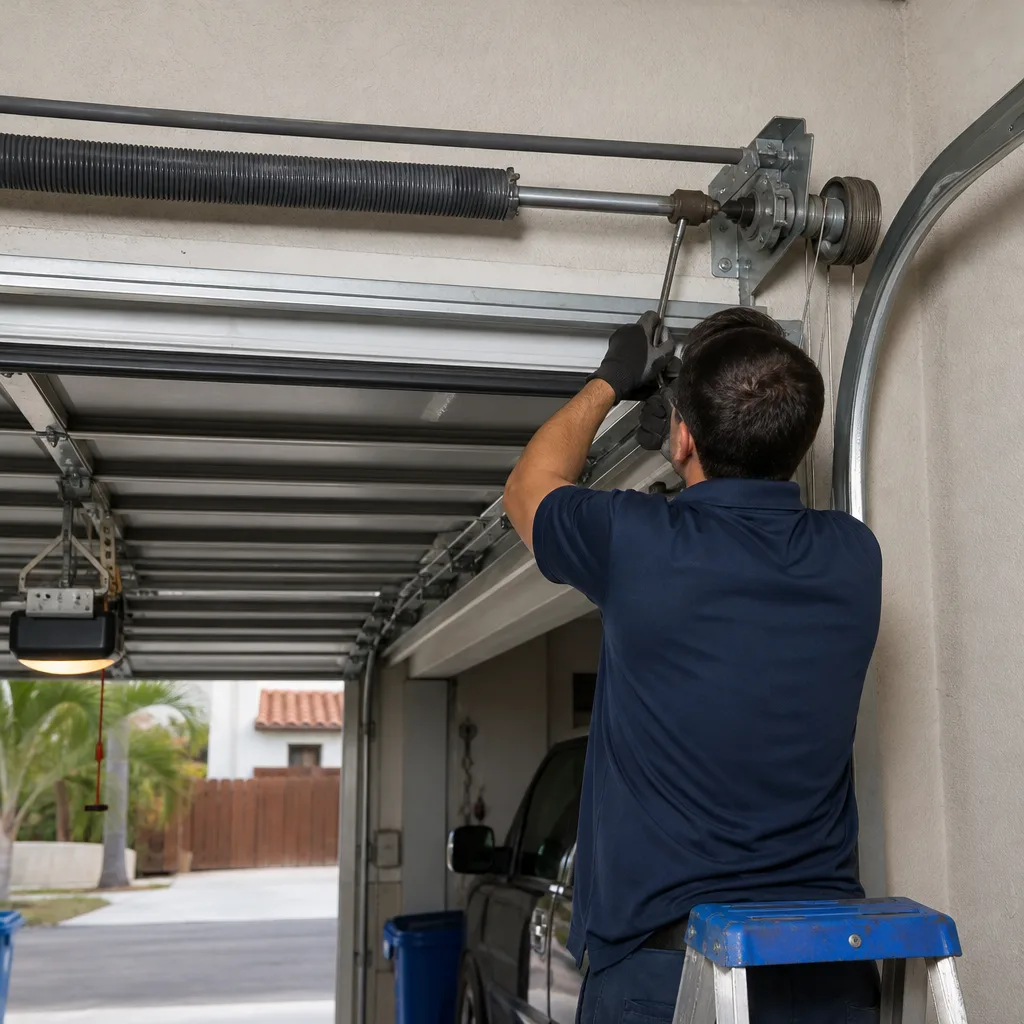 After
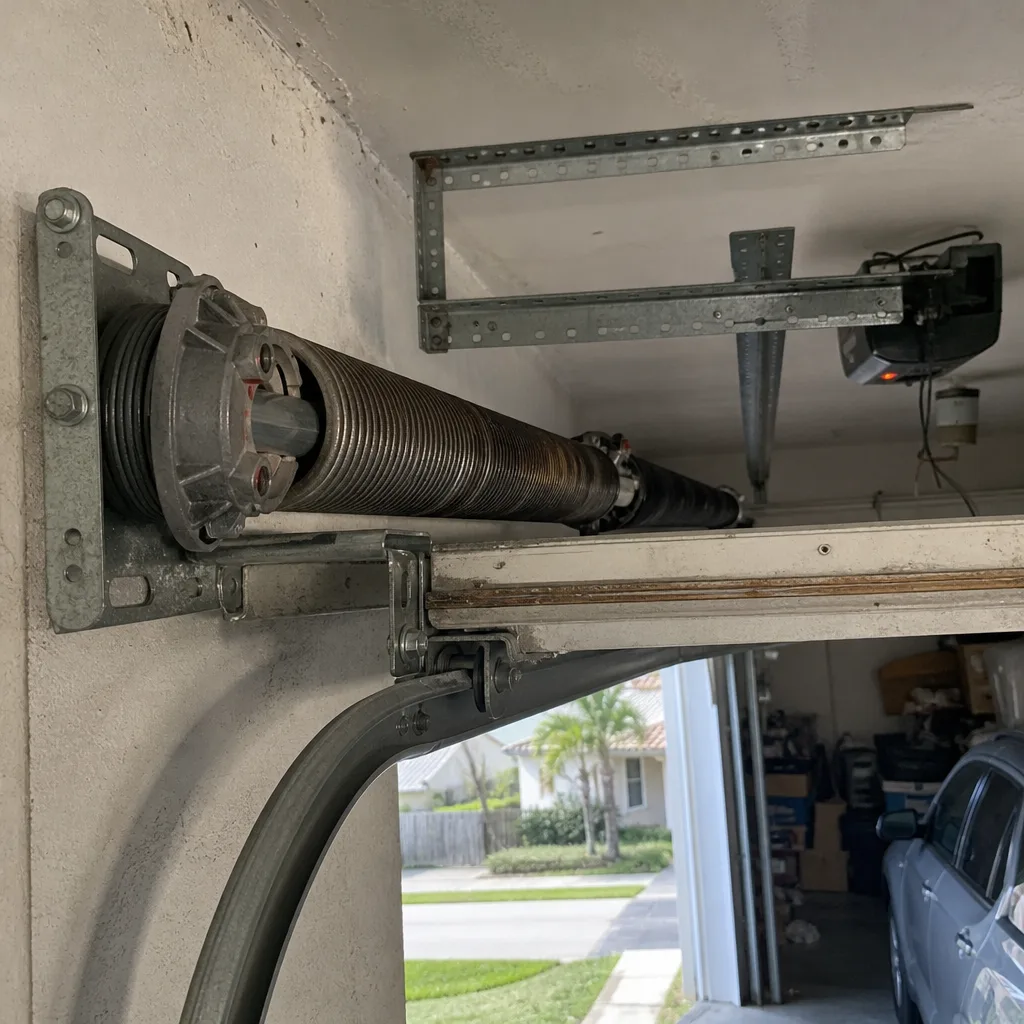 Before
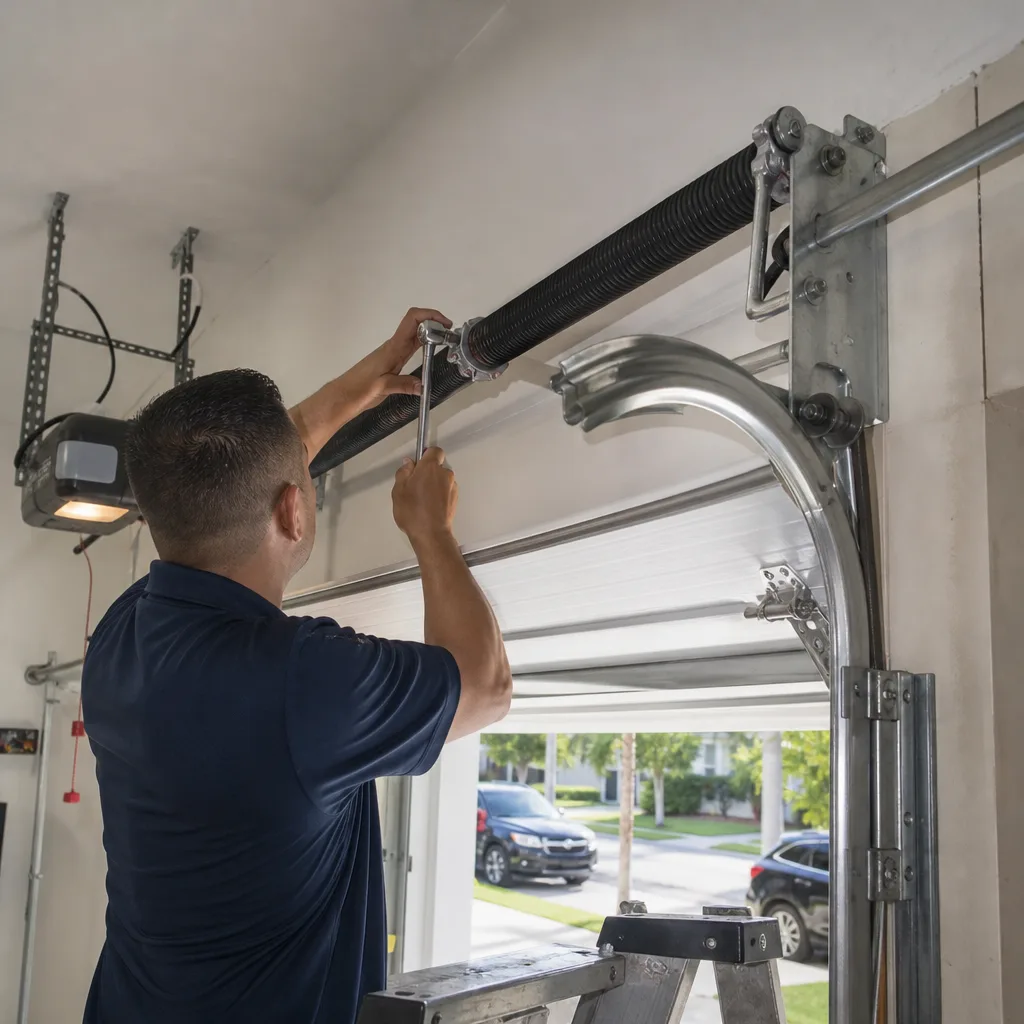 After